Durrës
Durrës
Albania's second-largest city, Durrës blends Roman ruins, family-friendly beaches, and Mediterranean port charm. Our complete guide to preparing your visit.
Head to Durrës, the capital of the Albanian Riviera, where you're welcomed along its stretch of the Adriatic coast. Unwind on the beach or at waterfront terraces that frame the shoreline. Discover its rich history by exploring ancient monuments. It's a city brimming with character that wins you over effortlessly.
History
Greek colonists founded Durrës in the 7th century BC, and the Romans expanded and developed it from the 3rd century onward. Its strategic location made it an essential port for both commerce and military operations in times of war. After the fall of the Western Roman Empire, the city fell under Byzantine rule.
Several kingdoms fought for control of Durrës during the Middle Ages. Following the Slavs, Venetians, and Albanians, the Ottomans finally took possession in the 16th century. Inhabitants gradually left the city and the port lost much of its influence. Durrës, however, soon recovered and by the 17th century had re-established itself as a commercial hub.
After the Balkan Wars, the Principality of Albania chose Durrës as its capital from 1913 to 1920. Despite the country's neutrality during both world wars, the city was occupied by various protagonists—notably Serbia, Austria-Hungary, Italy, and Germany—due to its privileged position. Multiple popular uprisings and coups also took place here. This tumultuous past is now overshadowed by the city's economic dynamism.
Durrës Today
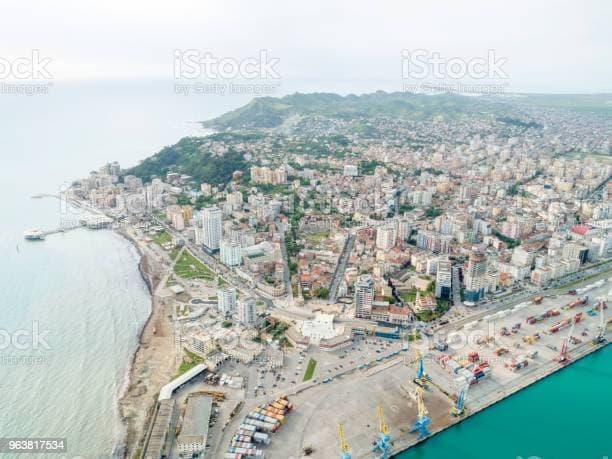
Durrës' port remains Albania's maritime trade hub. Alongside it, rapid urbanization has transformed the city's appearance. Hotels and apartment buildings have gradually spread along the coast, and pollution grows each year. Yet despite all this, Durrës continues to draw holidaymakers. Explore the capital of the Albanian Riviera and you'll understand why…
Step Back in Time
Durrës has preserved numerous traces of its past. The Amphitheatre of Durrës is the must-see attraction. Built in the 2nd century with a capacity of 20,000 people, it was the largest arena in the Balkans. Marvel at its galleries and wonderfully preserved mosaics. You can continue your journey through time by discovering the remains of the Byzantine forum dating from the 5th century. The site isn't open for visits, but from outside the fence you can glimpse the imposing marble columns of the structure.
More recent, the Venetian Tower is also among the city's iconic monuments. It was a stronghold of resistance during the Italian invasion in 1939. Don't miss the Villa of Zog, the Fatih Djami Mosque, and the Ethnographic Museum of Durrës.
Relax on Durrës' Beaches
Bardhori, Gjenerali, and Currila—these small stretches of shoreline offer a haven of relaxation where you can sunbathe and enjoy numerous water activities. Fancy a boat excursion? Head to the marina where tours take you offshore for a different perspective on Durrës. Along the waterfront, tourist infrastructure abounds to meet visitors' needs. You'll find a wide variety of restaurants. With Durrës close to Italy and Greece, you'll often stumble upon the specialties of both countries. So if you love pizza and pasta, you'll be thoroughly spoiled.
When to Visit?
Durrës enjoys the typical Mediterranean climate. It's hot and dry in summer, which lasts from May through mid-October. Winter is mild and humid. Year-round, the average temperature in this region is 21°C. In August, temperatures easily reach 30°C and can even approach 40°C. In January, temperatures hover around 10°C. Regarding precipitation, Durrës experiences its peak in January with 234 mm. In August, rainfall measures 46 mm.
Given these conditions, the best time to visit Durrës extends from May to November, particularly in July and August. During these months, the water temperature is perfect for swimming.
Durrës has no airport. The nearest terminal is in Albania's capital, Tirana. As the country's only international airport, Rinas International Airport serves connecting flights to most European capitals and major cities. Upon arrival, it takes roughly 30 minutes by car to reach Durrës. Taxis and buses operate this route.
Moreover, Durrës is accessible by boat from certain Italian cities such as Bari, Ancona, and Trieste.
The city center contains most of the archaeological sites. You can walk to explore local attractions. For more distant locations, taxis are at your service. Cabs are parked throughout the city and identifiable by the plate mounted above the vehicle. The city also has its own public bus network (orange-colored). Finally, if you prefer to be independent with your movements, you can rent a car from agencies at the airport to benefit from more competitive rates compared to city-center providers.
What to Do in Durrës?
- Climb the stairs and explore the galleries of the Amphitheatre of Durrës
- Discover the collections at the Ethnographic Museum of Durrës
- Enjoy water sports at Currila beach
- Stroll along the waterfront
- Sample Italian specialties prepared the local way in the city's restaurants, etc.
Want to discover this destination?
Our local advisors design your tailor-made trip.