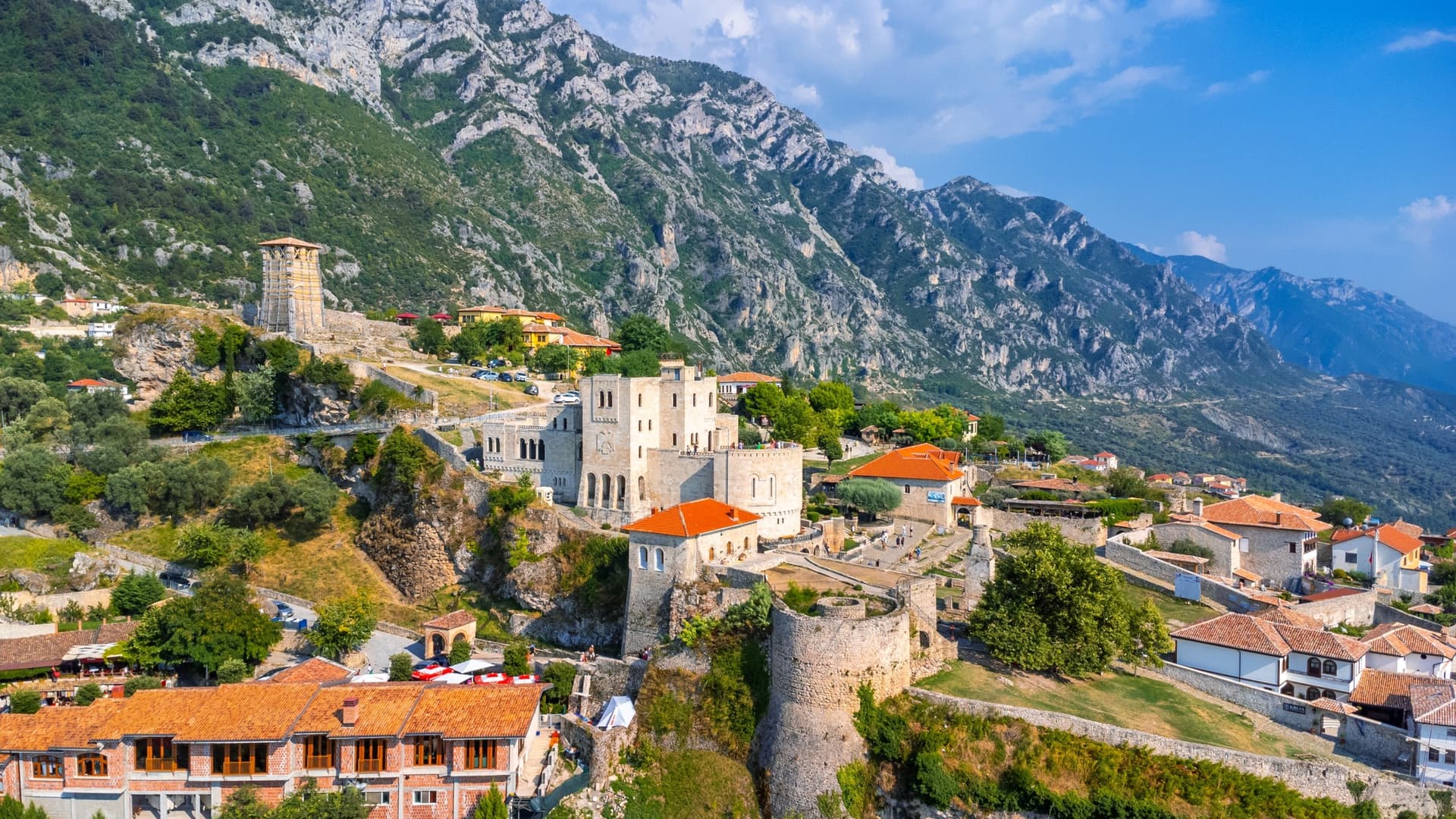
The City of Krujë
The City of Krujë
Perched 30 km from Tirana, Krujë brings together a medieval castle, an intact Ottoman bazaar, and mountain trails. The complete guide to visiting Skanderbeg's city.
Located approximately thirty kilometers north of Albania's capital, Tirana, the city of Krujë (or Kruja in Albanian) is far more than a simple tourist destination. With its mountainous landscapes and historical sites, it stands as a major repository of memory and culture. This small city overlooks the coastal plain, offering spectacular views and a unique atmosphere. A visit to Krujë is more than just a journey. It offers a chance to discover the soul and deep roots of Albania. Whether you're a history enthusiast, a hiking lover, or simply curious about exploring a new culture, this city will undoubtedly leave you with unforgettable memories.
History
Krujë's origins trace back to antiquity. It was founded by the Illyrian tribe of the Albanoi, then subjugated by the Romans in the 3rd century BCE. By the end of the 12th century, it was known as the capital of the Principality of Arbër, marking the first time an Albanian political entity was formed on this land. Later, it also became the capital of the Kingdom of Albania, solidifying its central role in the medieval period.
Krujë entered history as a bastion of resistance against the Ottoman Empire in the 15th century under the leadership of Gjergj Kastrioti, nicknamed Skanderbeg. He was the head of the League of Lezhë, a coalition of Albanian lords. In 1443, he retook the city from Ottoman hands and made it the heart of Albanian defense. From Krujë Castle, this Albanian national hero managed to repel three successive Ottoman sieges. This transformed the city into a symbol of courage and resistance for the Albanian people. It was only in 1478, after his death, that Krujë finally fell into Ottoman hands during the fourth siege.
Throughout the centuries, Krujë continued to play a strategic role, notably during Albania's internal conflicts in the early 20th century. The city had become a point of friction between the central Albanian Republic and the Principality of Albania. During the Italian fascist occupation of 1939, it served as a center for resistance activities under the leadership of Abaz Kupi.
By Car
For those seeking flexible transportation, it's possible to rent a car in Tirana. Krujë is located approximately 20–30 kilometers north of the capital, roughly 45 minutes by road. To get there, take the SH2 highway toward Fushë-Krujë and follow the signs to your destination via the SH52. Furthermore, from other cities such as Durrës or Shkodër, the route is the same.
By Bus
Buses depart regularly from Tirana's Regional Bus Terminal. The journey to Krujë takes approximately one hour depending on stops. Buses are affordable, though schedules may vary.
By Taxi
It's also possible to take a taxi from Tirana city or its airport to reach Krujë. The fare is negotiable before departure. The journey takes about thirty minutes.
Attractions
Krujë Castle
Krujë Castle is an impressive medieval fortress, built around 1190 on a rocky hill. This fortification, covering approximately 2.5 hectares, is famous for its elliptical shape and strategic position, offering breathtaking views over the coastal plain. During the 13th and 14th centuries, it housed the center of medieval Albania's power and played an essential role in the battles against the Ottomans under Skanderbeg.
The castle has been rebuilt and restored many times over the centuries. Today, it retains an imposing appearance, like a testament to the region's history. While strolling through its walls and watchtowers, visitors can imagine the battles that took place there.
Skanderbeg National Museum
At the heart of the castle lies the Skanderbeg National Museum, which traces the life of the Albanian national hero and the history of the struggle for independence. Inaugurated in 1982, this museum is divided into thematic sections, covering key periods such as:
- Antiquity
- The High Middle Ages
- Resistance against the Ottomans
- Skanderbeg's chancellery.
Documents, weapons, and illustrations are displayed here, testifying to Skanderbeg's military and political legacy.
Old Bazaar
After exploring the castle, visitors can head down to Krujë's Old Bazaar (or "Parazi i Vjetër"). This historic market is one of the oldest in the country. With its cobbled streets and small wooden shops, it has remained intact since Ottoman times. A wide variety of artisanal products can be found there, such as:
- Hand-woven Albanian carpets with colorful patterns
- Copper objects
- Antiques
- Jewelry and other traditional souvenirs.
This market is not merely a place of commerce, but also a meeting space where traditional Albanian culture is celebrated. Local artisans perpetuate ancestral crafts, and visitors can witness demonstrations of weaving and jewelry making.
Ethnographic Museum
Krujë's ethnographic museum is housed in a traditional-style former Ottoman residence dating from 1764. The building was once inhabited by the noble Toptani family. The museum offers insight into the daily lives of Albanians from centuries past. Visitors can see everyday objects and period artisanal tools that remain functional. This exhibition provides a glimpse of the manufacturing techniques for carpets, clothing, and copper objects typical of Albania.
Qafë Shtamë National Park
Qafë Shtamë National Park is located approximately twenty kilometers from Krujë city. It is an area of wild nature with rugged terrain that attracts hikers and outdoor enthusiasts. The park is renowned for its pine forests, natural springs, and varied wildlife. Climbing the trails, visitors can enjoy splendid views of the Adriatic Sea and breathe the pure air of this private zone.
Zgerdhesh Archaeological Site
A few kilometers from Krujë, the Zgerdhesh site attracts history enthusiasts. Although it is not mentioned in any ancient texts, some researchers believe it may be the site of the ancient city of Albanopolis, described by the Roman historian Pliny the Elder. The ruins of Zgerdhesh testify to Illyrian civilization and reveal vestiges of tombs dating from the Roman era.
Black River Canyon
In the Fushë-Kruja region, near Krujë, the Black River Canyon is a hidden natural marvel worth exploring. With its rocky walls and a small 17th-century bridge, this picturesque site offers a peaceful escape and a beautiful hiking opportunity for visitors.
Want to discover this destination?
Our local advisors design your tailor-made trip.