Gjakova and the West
Between the longest Ottoman bazaar in the Balkans, the Byzantine frescoes of Deçani and the vineyards of Rahovec, western Kosovo concentrates a dense heritage still little visited.
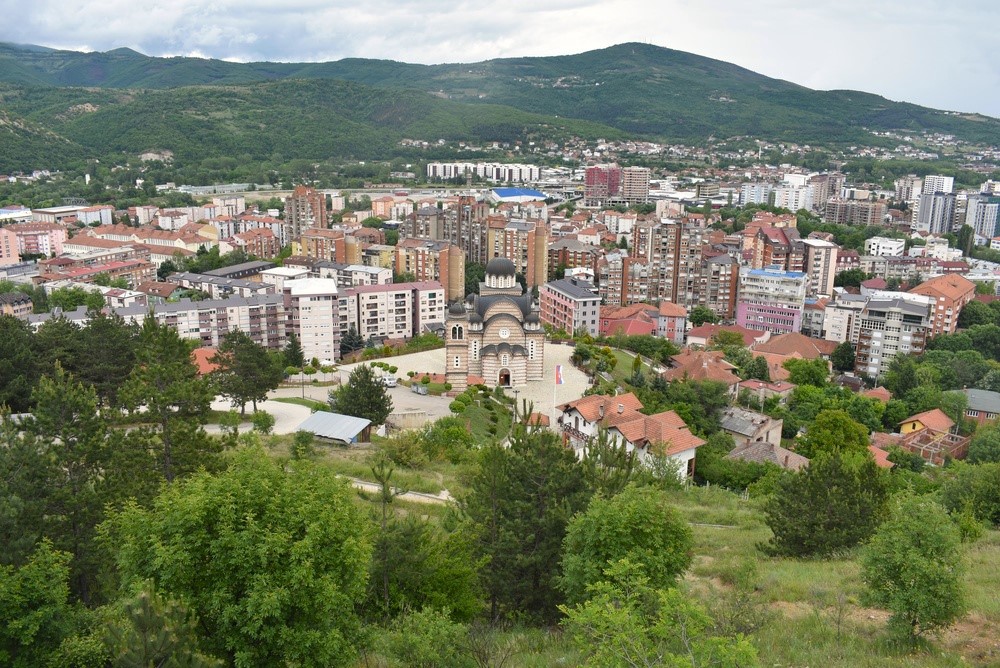
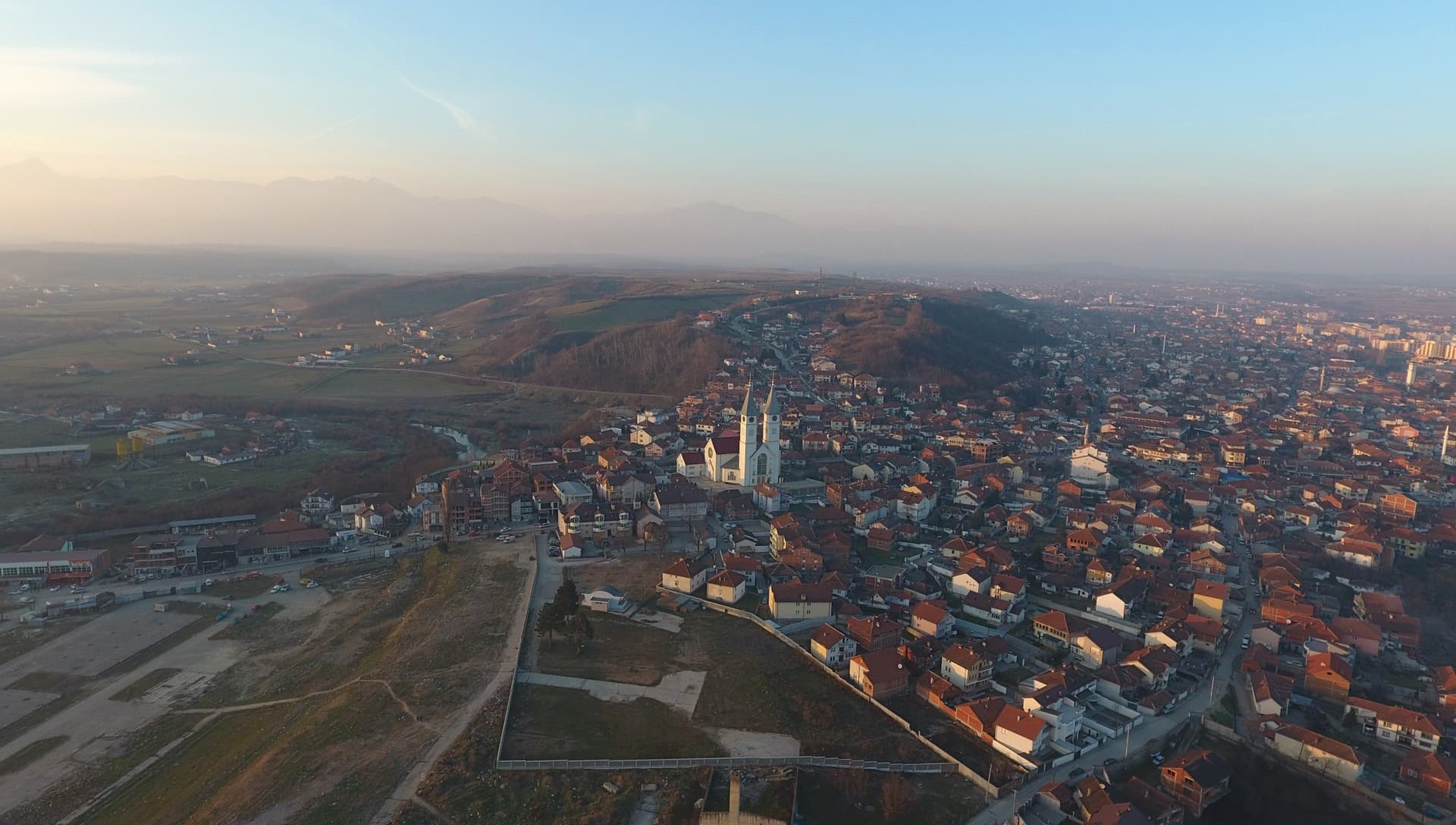
Gjakova occupies western Kosovo, in the Dukagjini plain (Metohija in Serbian), between the Erenik river and the first foothills of the Dinaric Alps. The city is home to approximately 60,000 residents and retains a distinct identity from the rest of the country: strong artisanal tradition, marked Gheg dialect, vivid memory of the 1998–1999 war that destroyed nearly 90% of the historic centre. Our local agency offers this region as a 1–2 night stopover between Prizren and Peja, or as a base for exploring Deçan, Junik and the vineyards of Rahovec.
The heart of Gjakova remains the Çarshia e Madhe, the Grand Bazaar, faithfully reconstructed after 1999 along 500 metres of paved lanes. Around fifty active workshops remain here: coppersmiths working the metal, tailors of xhubleta (the traditional woollen dress), silver filigree makers. On Tuesday and Friday mornings, the vegetable market sets up at the western edge. The Hadum mosque, dated to 1594, has preserved its original wall paintings on the porch—one of the few in the region to have escaped destruction.
Some 15 km to the south-west, the Serbian Orthodox monastery of Visoki Deçani, inscribed on the UNESCO World Heritage list in 2004, houses over 1,000 portraits of saints painted between 1335 and 1350, the finest ensemble of late Byzantine frescoes preserved in the Balkans. The site remains under the protection of the Italian KFOR: we arrange access in advance with passport presentation at the control post. Visits take place in silence, with no photography permitted inside, and last approximately one hour. The monks sell locally produced ewe's cheese and plum brandy at the exit.
The climate of the Dukagjini plain is milder than that of the surrounding massifs: average altitude hovers around 350 metres, winters are cold but less snowy than in Peja, summers hot and dry. This particularity enabled the development of viticulture around Rahovec, 30 km east of Gjakova. Stone Castle and Bodrumi i Vjetër cellars open their wine rooms to visitors, with tastings of local varieties: vranac for robust reds, smederevka for crisp whites. Expect 8–15 € per bottle at the cellar, double that for export.
Further west, the village of Junik and the Erenik valley lead towards the Albanian border. Kullas still stand here—those fortified stone tower houses of the 18th and 19th centuries, built for family defence according to the Kanun customary code. A dozen have been restored and are open to visitors in Junik, including the Kulla e Mazrekajve. Local cuisine revolves around flija, a layered pancake cake cooked under a bed of hot embers, tavë kosi (lamb with yoghurt baked in the oven) and the dried red peppers of Rahovec. The grape harvest festival in Rahovec, early September, draws the entire region for processions, concerts and open tables.
This region remains little frequented by international travellers, who often head straight from Prizren to Peja. Precisely this is what makes it compelling to us: genuine heritage density, hospitality without tourism artifice, still-reasonable prices, and forthright testimony to the country's recent history that residents are keen to share.
To Discover
Çarshia e Madhe of Gjakova. 500 metres of rebuilt Ottoman bazaar, some fifty active workshops of blacksmiths, tailors and goldsmiths. Vegetable market on Tuesday and Friday mornings.
Frescoes of Visoki Deçani. Over 1,000 portraits painted between 1335 and 1350 in the Serbian Orthodox monastery, access arranged via the KFOR post. Cheese and raki on sale at the exit.
Vineyards of Rahovec. Tastings of vranac and smederevka in the cellars of Stone Castle or Bodrumi i Vjetër. Bottles from 8 €, grape harvest celebrated early September.
Kullas of Junik. Fortified stone tower houses of the 18th century, inherited from the Kanun customary code. A dozen restored, including the Kulla e Mazrekajve, 25 km west of Gjakova.
Hadum Mosque and its hammam. An edifice from 1594 with original wall paintings preserved on the porch, adjoining a 17th-century Ottoman hammam currently undergoing restoration.
When to Go
The Dukagjini plain offers a wider window than the neighbouring massifs. From May to mid-June and mid-September to late October, temperatures oscillate between 18 and 25 °C during the day, with little rainfall and clear light over the vineyards and frescoes. July and August regularly exceed 32 °C in Gjakova, the bazaars become stifling in the afternoon, but terrace evenings remain pleasant. December to February are cool (0 to 7 °C during the day), without lasting snow on the plain, allowing visits to monasteries and bazaars out of season on condition of accepting short days.
Two periods warrant precise timing: the grape harvest in Rahovec early September, and Orthodox Easter week (Julian calendar, typically April) when Deçani becomes inaccessible to visitors. Rainfall concentrates in November and March, without hindering circulation but making the surroundings of the kullas muddy.
Practical Advice
We recommend 2 full days for the region: one day for Gjakova and the Deçan monastery, a second for Rahovec, Junik and the Erenik valley. Access is by road from Pristina (1h45, 100 km) or from Tirana airport in Albania (3 hours, 160 km) via the Qafa e Morinës pass. No railway line serves western Kosovo; a vehicle with driver remains the most flexible solution for combining sites.
Gjakova flows naturally into Prizren to the south (45 minutes' drive) and Peja to the north (40 minutes), making it the central link of a western circuit spanning 5–7 days. Hotel comfort remains modest: a handful of renovated stone guesthouses in the bazaar, two 4-star hotels on the outskirts, no luxury category. The region suits travellers curious about Ottoman and Byzantine history, enthusiasts of little-known wines, and walkers wishing to approach the Dinaric Alps from their southern flank. Less suited to families with very young children due to distances and the memorial character of some visits.