Prizren and the South
An Ottoman city of four faiths nestled at the foot of the Sharr Mountains, Prizren blends 15th-century built heritage with alpine meadows still grazed at 2,000 meters.
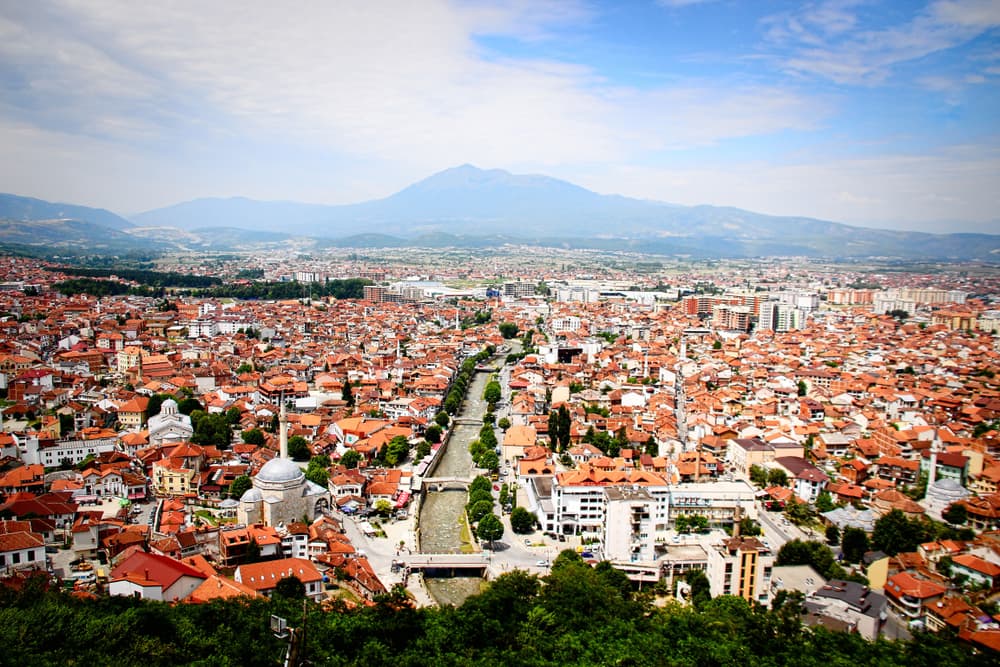
Prizren reveals itself from the Ottoman stone bridge that spans the Bistrica, at the foot of Kaljaja fortress. The city is backed by the foothills of the Sharr Mountains and preserves a dense urban fabric of cobbled streets, 15th-century hammams, and mosques including the Sinan Pacha, built in 1615 with stones from the Monastery of the Holy Archangels destroyed by the Ottomans. It is the country's second-largest city by population, but the first in pre-20th-century built heritage.
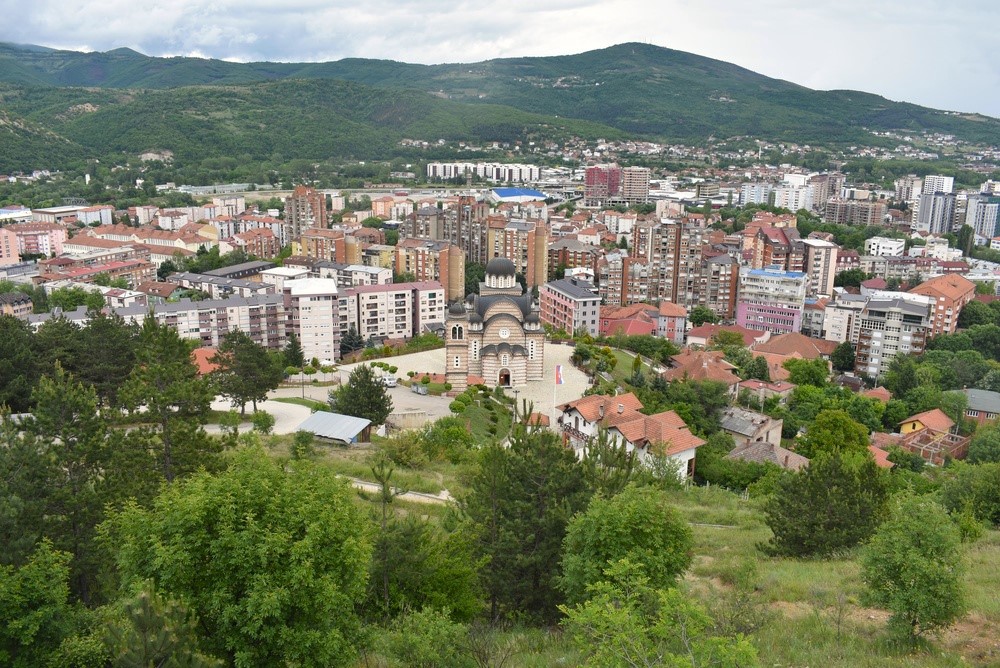
Prizren's uniqueness lies in its human composition. Albanians, Turks, Bosniaks, and Roma coexist here, and Turkish remains a street language in the bazaar quarter. The Catholic Cathedral of Our Lady of Perpetual Help faces, just a few hundred meters away, the Bajrakli Mosque and the Serbian Orthodox Monastery of the Holy Archangels below it, protected by KFOR since 1999. This confessional stratification is evident in the bakeries (Turkish simit alongside Bosniak burek), in the architecture of the corbelled houses of the Marash quarter, and in the patron saint festivals that punctuate the year.
In August, DokuFest transforms the city for nine days. The documentary film festival, founded in 2002, sets up its screens on the banks of the Bistrica, in the courtyard of the Gazi Mehmet Pacha hammam, and on the castle roof. Nearly 250 films are screened, hotels are fully booked six months in advance, and we recommend to our English-speaking team that they block accommodations as early as January for travelers wishing to attend. Outside the festival, the city maintains its rhythm: terraces along the shadervan, the central square shaded by the restored bazaar, morning markets around Sharri Street.
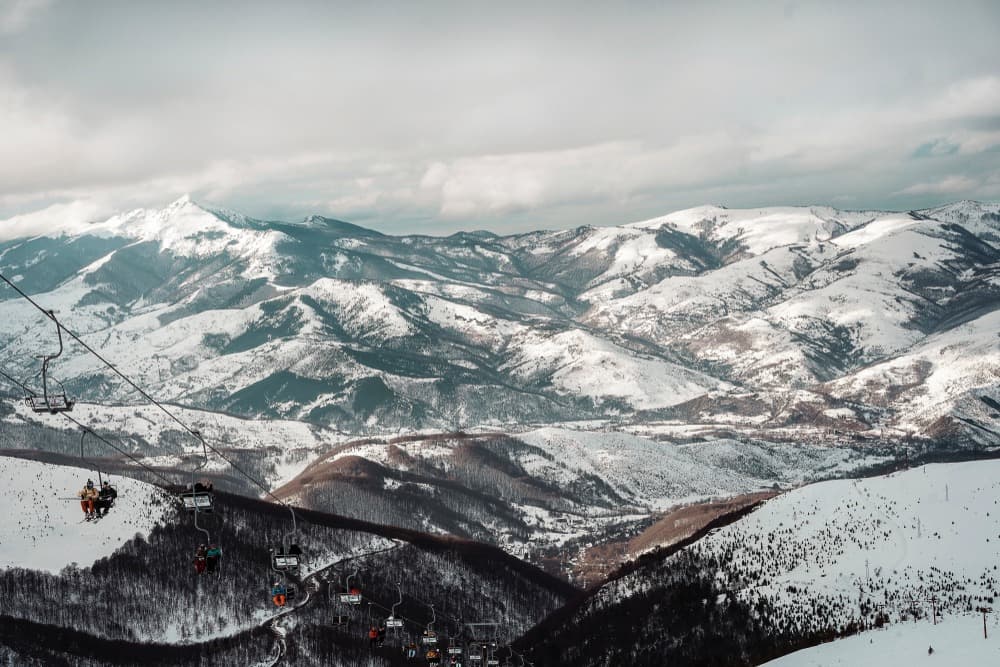
South of Prizren, the road climbs toward Brezovica and the Sharr massif, shared with North Macedonia and Albania. The peaks exceed 2,700 meters (Gjeravica is not here, but Bistra reaches 2,651 m on the Kosovar side). The alpine pastures are still grazed in summer by shepherds who produce sharri, a pressed cheese aged in brine, to be tasted directly in the bacchi (summer cabins) above the village of Štrpce. The villages of Mušnikovo, Sredska, and Drajčići preserve Orthodox churches from the 14th and 15th centuries, some with frescoes, visited only during pilgrimages outside these seasons.
Further west, the Has plain reaches the Albanian border at the Vrbnica pass, a road crossing point to Kukës in two hours. This geographical opening explains why Prizren long functioned as a commercial crossroads between the Adriatic coast and Ottoman Macedonia. The region preserves from this past a living craft heritage: silver filigree worked in a dozen bazaar workshops, carpet weaving in Has villages, horn-handled knife manufacturing.
The local economy remains modest, supported by diaspora remittances, mountain agriculture, and growing domestic tourism. Prizren has become in recent years a weekend destination for Albanians from Tirana, arriving by coach via Kukës. Our team works with families from Sredska for mountain accommodations and with two guesthouses in the Marash quarter for central Prizren.
What to explore
Kaljaja fortress at sunrise. A 25-minute climb from the stone bridge, with sweeping views over the minarets, the Bistrica, and the plain toward Suva Reka. Open without charge, light crowds before 9am.
Shepherds and Sharr cheese at Sredska. A day in the Sredska valley, stopping at two summer cabins between June and September to taste young sharri and the eight-month-aged variety.
DokuFest on the banks in August. Nine days of open-air screenings in the hammam, the fortress, and along the river. International documentary programming, studious atmosphere rather than festive.
Monastery of the Holy Archangels. Ruins of the complex founded by Stefan Dušan in the 14th century, below the fortress, still under military protection. Visits possible by appointment through our agency.
Filigree workshop in the bazaar. We arrange a two-hour demonstration with a third-generation artisan on Union Street, featuring the twisted silver thread technique worked with pincers.
When to visit
The best period for Prizren runs from mid-May through late September. June and September are the most comfortable months, with temperatures of 22 to 28 °C in the city and cool nights. July and August regularly reach 33-35 °C in the Bistrica basin, but climbing to Brezovica (1,700 m) or Sredska (1,100 m) gains 8 to 10 °C. Avoid the first week of August unless you're coming for DokuFest: accommodations are saturated and prices doubled.
Winter is harsh in the Sharr: Brezovica operates as a small ski resort from December to March, snow guaranteed above 1,800 m, but summer villages are closed and cabins deserted. March and April remain wet, with 80 to 110 mm of monthly rainfall and mountain roads occasionally impassable. To combine city exploration with high-altitude hiking, aim for the window from June 15 to September 15.
Practical advice
Plan a minimum of three nights in this region: two in Prizren for the city, workshops, and monastery, one night at altitude toward Sredska or Štrpce for the Sharr. Prizren is 1.5 hours from Pristina airport via the R7 highway, and 2 hours from Tirana via Kukës, making it a relevant entry point for a combined Albania-Kosovo itinerary. The region logically connects with Gjakova and the west (45 minutes by road) then Peja and the Dinaric Alps for hikers wanting to tackle two mountain ranges. In-city comfort is adequate, with around a dozen restored guesthouses in the Ottoman quarter and two upscale hotels. In the mountains, accommodations are family-run, sometimes rustic but clean, with communal meals. Prizren and the South are particularly suited to travelers interested in built heritage, cultural coexistence, and mid-mountain trekking. Less suitable for families with very young children due to cobblestones in town and narrow mountain roads at altitude.