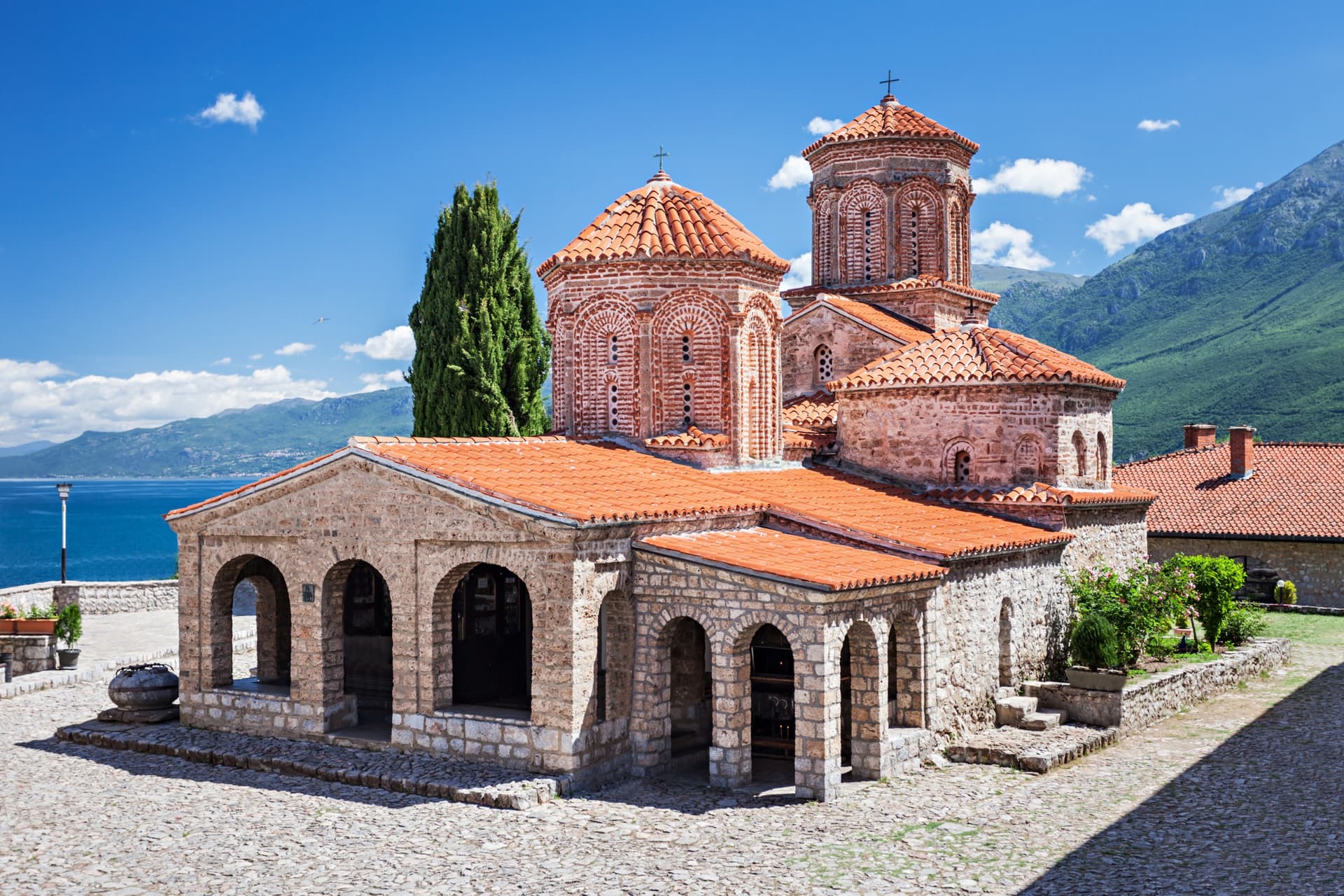
Saint Naum Monastery
Saint Naum Monastery
Founded in 905 on the southern shore of Lake Ohrid, Saint Naum Monastery combines Byzantine heritage, the saint's tomb and pristine natural surroundings.
The Saint Naum Monastery stands on a plateau overlooking Lake Ohrid, approximately 29 km south of the city of Ohrid. Founded in the early 10th century, this Byzantine complex blends Orthodox religious heritage, medieval architecture and a remarkable natural environment, in close proximity to the lake's springs.
Geographic note: the site is today located in North Macedonia, just across the Albanian border. It is traditionally included in itineraries from Albania via the southwestern shore of Lake Ohrid.
Why visit Saint Naum Monastery
The monastery ranks among the oldest surviving monuments of Slavic religious architecture. Its appeal rests on three key elements:
- A Byzantine complex restored in the 16th century, featuring frescoes, icons and ancient wooden structures.
- The tomb of Saint Naum, a major figure in the Christianization of the Slavs in the 10th century.
- An exceptional natural setting, between lake, crystalline springs and forest crisscrossed with trails.
The visit combines religious heritage with outdoor exploration, making it a worthwhile stop for travelers exploring the lake region between Albania and North Macedonia.
History of the monastery
The original monastery was built in 905 on a plateau, approximately 29 km south of Ohrid, by Saint Naum of Ohrid. The site fell into ruin between the 11th and 13th centuries, before being restored in the 16th century as the Byzantine complex we see today.
After its renovation, the monastery was briefly used as a Greek school, continuing its educational mission. In the 20th century, it came briefly under Albanian control between 1912 and 1925, then was returned to the Kingdom of Yugoslavia. It is now located in North Macedonia.
Who was Saint Naum of Ohrid?
Saint Naum was a medieval scholar who, alongside Saint Clement, preached Christianity to the Slavic peoples. Both were disciples of Cyril and Methodius and actively contributed to the spread of Glagolitic and then Cyrillic scripts, which would become the basis for scripts used throughout the Orthodox Slavic world. Saint Naum died in 910 at the age of 80. His remains are preserved in a stone coffin within the monastery, which remains a pilgrimage site to this day.
What to see on site
The Church of the Holy Archangels
At the heart of the grounds stands the Church of the Holy Archangels, the main building of the complex. Inside, the wooden structures date from the 13th and 17th centuries. The icon of the Holy Assumption of Saint Naum represents its oldest thematic element. Frescoes cover walls and domes; the saint's tomb is nestled in a side chapel, where according to local tradition, visitors place their ear against the stone.
Fortifications, gardens and guest quarters
Stone fortifications and tall cypress trees shield the central buildings from outside view. On the periphery, former dormitories have been converted into the Ethno hotel complex, offering on-site accommodation with lake views.
The monastery's garden stands out for its fountain streams and a small community of free-roaming peacocks. A few cafeterias, souvenir kiosks and beach bars occupy the area near the shore.
In the surrounding area
The springs of Lake Ohrid
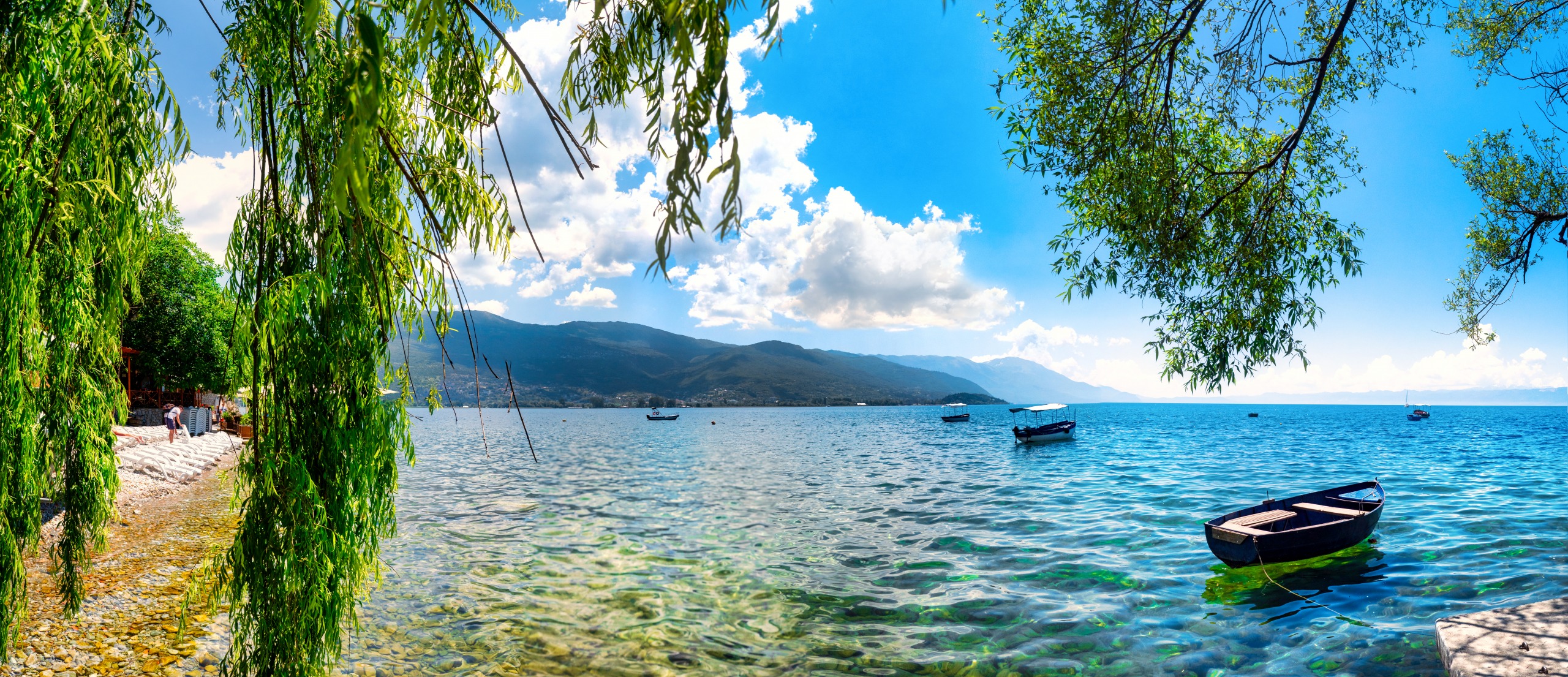
Just a few minutes' walk from the monastery lie the springs of Lake Ohrid, vast pools of translucent water fed by natural springs. Flat-bottomed boats allow visitors to tour the area and observe aquatic vegetation and the water's color variations throughout the seasons.
The forest and its trails
The forest bordering the grounds is traversed by cycling paths. Along the route, you'll find three churches and an orchard; plan for approximately 30 minutes on foot to complete the main loop. Signposts mark points of interest.
To extend your exploration of the area, also visit our pages dedicated to Germenj National Park and Karaburun Peninsula, two remarkable natural areas in southwestern Albania.
When to visit
The most pleasant period extends from late spring through early autumn, when lake navigation is possible and forest trails are accessible. In spring, vegetation awakens and birdsong accompanies your walk; in summer, the shade of cypress and willow trees provides relief from the heat. In winter, the site remains accessible, though some tourist activities (boat tours, lakeside dining) operate at reduced capacity.
How to get there
From Ohrid, several options are available:
- By boat from Ohrid Bridge near downtown: this is the most picturesque option, with departures in the morning and return in late afternoon (modest fee, seasonal frequency).
- By bus: regular service from Ohrid's bus station, economical but less frequent.
- By taxi or car: approximately 40-minute journey along the southwestern shore of the lake.
To reach the region from farther away: TAV Ohrid Airport receives flights from Brussels, Belgrade, Amsterdam, Zurich and Tel Aviv. From Skopje, allow approximately 3 hours of driving via Kičevo (approximately 170 km). A connection also links Ohrid to Debar via Mavrovo National Park.
From the Albanian side, the Tushemisht/Sveti Naum border crossing is in immediate proximity, making the site easy to include in an itinerary from Pogradec.
Practical information
- Location: southern shore of Lake Ohrid, approximately 29 km south of Ohrid (North Macedonia), close to the Albanian border.
- Duration of visit: plan for 1.5 to 3 hours depending on whether you add the springs walk and forest exploration.
- Dress code: modest clothing required to enter the church (shoulders and knees covered).
- On-site accommodation: available in the Ethno hotel complex housed in the former dormitories.
- Border: bring your passport if arriving from Albania.
Frequently asked questions
Frequently asked questions
No, it is located in North Macedonia, on the southern shore of Lake Ohrid, but just across the Albanian border. It is very often visited from Albania via Pogradec or included in tours covering both countries.
The boat departing from Ohrid Bridge is the most pleasant option in season. The bus remains the most economical option, while taxi or car rental offers the most flexibility.
Plan approximately 1.5 hours for the monastery alone, and 3 hours if you add the lake springs walk and forest trail.
A medieval scholar and disciple of Cyril and Methodius who preached Christianity to the Slavic peoples alongside Saint Clement and participated in spreading Glagolitic and Cyrillic scripts. He died in 910 and is buried in the monastery.
Yes, the former dormitories have been converted into the Ethno hotel complex, which offers rooms with lake views.
Plan your trip
Would you like to include Saint Naum Monastery and Lake Ohrid region in a broader itinerary? Consult our trips to Albania to craft a tailor-made experience combining heritage, nature and coastal cities.
Interested in this visit?
We can include it in your personalised itinerary.