Prizren Fortress (Kalaja e Prizrenit)
Prizren Fortress (Kalaja e Prizrenit)
Dominating Prizren from a rocky spur, the Kalaja fortress blends Byzantine, Serbian, and Ottoman remnants. Its panorama of tiled roofs and minarets rising from the old town makes it an unmissable stop when visiting Kosovo.
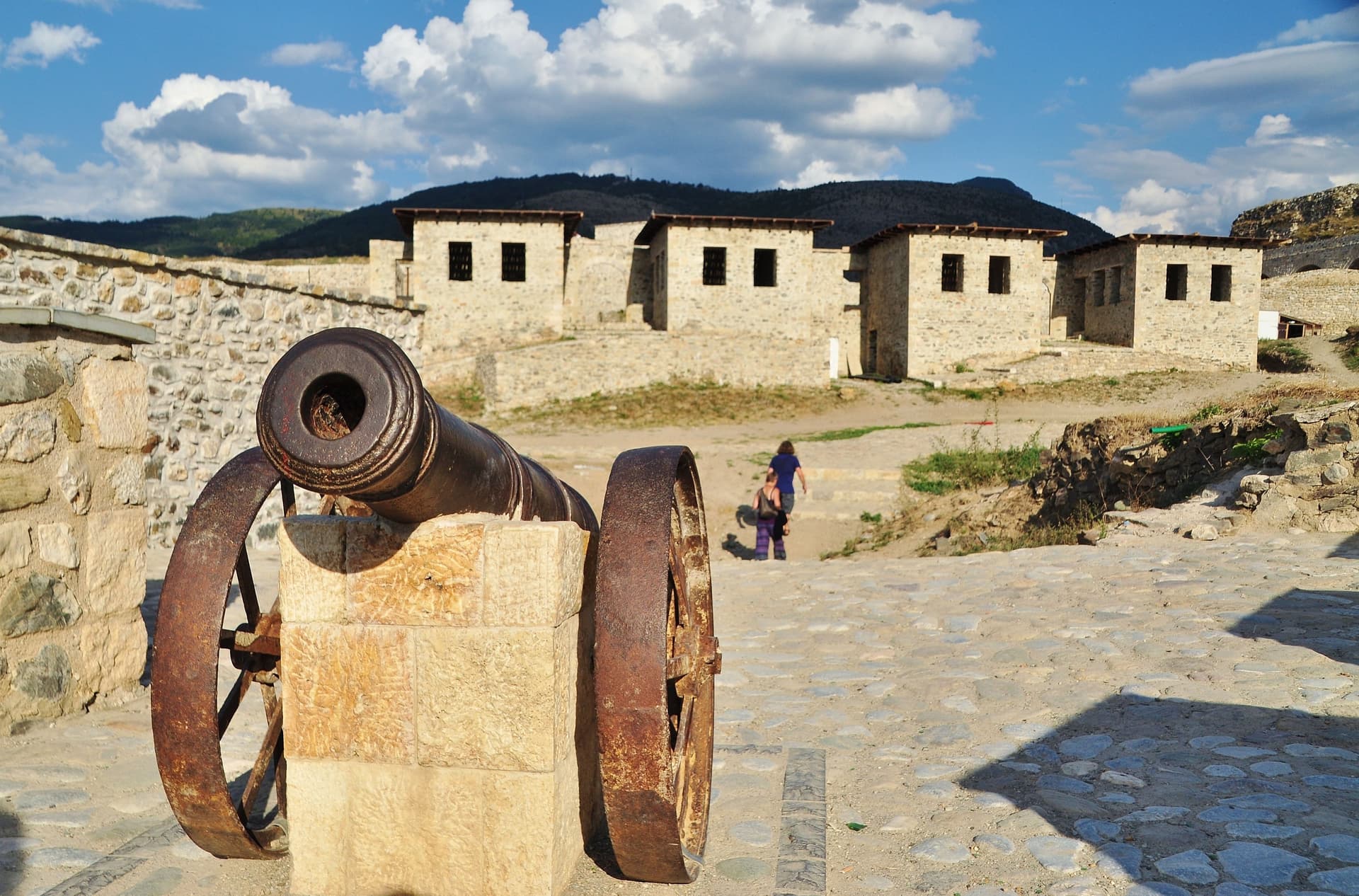
Perched on a rocky spur overlooking Prizren, the medieval fortress of Kalaja has watched over the city for centuries. Its stone ramparts offer sweeping views of red-tiled roofs, minarets, and surrounding hills. A seat of Byzantine, then Serbian, then Ottoman power, it distils the complex history of Kosovo into a single site. The walk up from the historic centre is part of the experience itself.
Practical information at a glance
- Access: on foot from Prizren's bazaar, marked trail starting near Sinan Pacha Mosque
- Recommended duration: 1 to 1.5 hours (visit plus panorama)
- Footwear: hiking shoes recommended, uneven terrain
- Accessibility for people with reduced mobility: not accessible, steep climb on paved path
What to see
The ramparts preserve several towers and sections of walls in good condition. Within the fortress walls stand the ruins of the Byzantine Church of the Holy Saviour, partially restored. The upper terrace offers a 360° view over Prizren, the Bistrica river, and the Šar mountains. Archaeological excavations have uncovered remains from different periods.
History and context
The earliest fortifications date back to the Byzantine period, probably around the 6th century. The fortress reached its peak under Serbian Tsar Stefan Dušan in the 14th century, who made Prizren one of his capitals. The Ottomans captured it in the 15th century and incorporated it into their regional defensive system. It gradually fell into decay after the 18th century. Consolidation work has been carried out over the past few decades.
Highlights of the visit
The panorama over Prizren
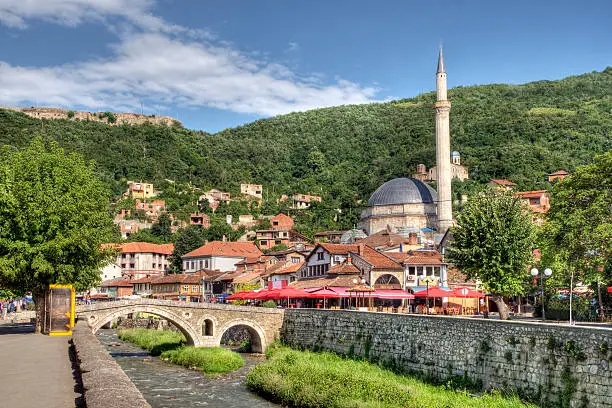
From the upper rampart walk, the view encompasses the entire old town: minarets, bell towers, tiled roofs, and the Bistrica flowing through the centre. It is one of Kosovo's most photographed vantage points.
The ruins of the Church of the Holy Saviour
Within the fortress walls, this 14th-century Byzantine church preserves masonry fragments and speaks to the era of Stefan Dušan. Its presence speaks to the layering of cultures on this site.
The climb through the historic quarter
The access path winds through paved alleys, Ottoman houses, and old fountains. The ascent itself provides an immersion into the historic urban fabric of Prizren.
Tips for photography
Morning light is ideal for photographing the town from the ramparts, before heat haze veils the mountains. In late afternoon, golden light on the tiled roofs is particularly striking. To frame the fortress from below, position yourself on the stone bridge (Ura e Gurit) at the Bistrica's edge.
Location and access
The fortress sits elevated, directly above Prizren's historic centre. The trail begins near the Sinan Pacha Mosque and the bazaar. Prizren is accessible from Pristina by road in around 1.5 hours. No public transport goes up to the fortress; walking is the only way to reach it.
In the surroundings
- Sinan Pacha Mosque — grand 16th-century Ottoman mosque at the foot of the fortress, the natural starting point for the ascent.
- Stone Bridge (Ura e Gurit) — Ottoman bridge spanning the Bistrica, offering the best angle on the fortress from the town.
- Notre-Dame Cathedral of Prizren — Catholic church in the historic centre, testimony to the city's religious diversity.
- League of Prizren House — museum dedicated to the Albanian League of 1878, a founding moment of Albanian national identity.
Frequently asked questions
Spring (April–May) and autumn (September–October) offer pleasant temperatures for the climb. In summer, heat can make the ascent arduous; plan to start early in the morning.
Allow 1 to 1.5 hours including the walk up, exploring the ramparts, and time spent enjoying the panorama. The descent is faster.
Hiking shoes with non-slip soles are strongly recommended. The path is paved and uneven, sometimes slippery after rain.
Yes. The historic centre can be explored entirely on foot. Sinan Pacha Mosque, the stone bridge, and the League of Prizren House are all within a few minutes' walk of the trail's starting point.
No known restrictions on photography of the ramparts and fortress enclosure. The site is open-air and freely accessible.
Local guides offer tours of the historic centre including the fortress, usually arranged through travel agencies or Prizren's tourist office.
Interested in this visit?
We can include it in your personalised itinerary.