Gračanica Monastery
Gračanica Monastery
Founded in 1321 by King Stefan Milutin, Gračanica Monastery stands as one of Kosovo's best-preserved medieval monuments, UNESCO-inscribed, renowned for its Byzantine frescoes and five emblematic domes.
Gračanica Monastery rises some fifteen kilometers southeast of Pristina, in the town of the same name. Founded in the early 14th century by Serbian King Stefan Milutin, it ranks among the finest surviving examples of medieval Byzantine-Serbian architecture in the Balkans. Inscribed on the UNESCO World Heritage List, it remains an active Orthodox place of worship, inhabited by a community of nuns.
Quick Facts at a Glance
- Admission: free (donations welcome)
- Dress code: shoulders and knees covered; headscarf recommended for women
- Recommended duration: 45 minutes to 1 hour 30 minutes
- Access from Pristina: regular buses from the central bus station to Gračanica
- Status: UNESCO site (part of the "Medieval Monuments in Kosovo" series)
What You'll See
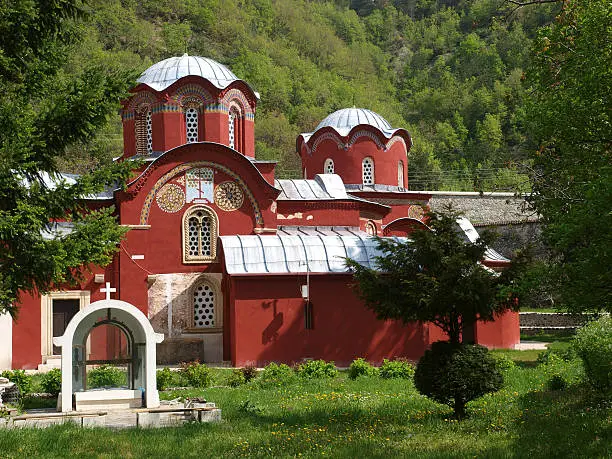
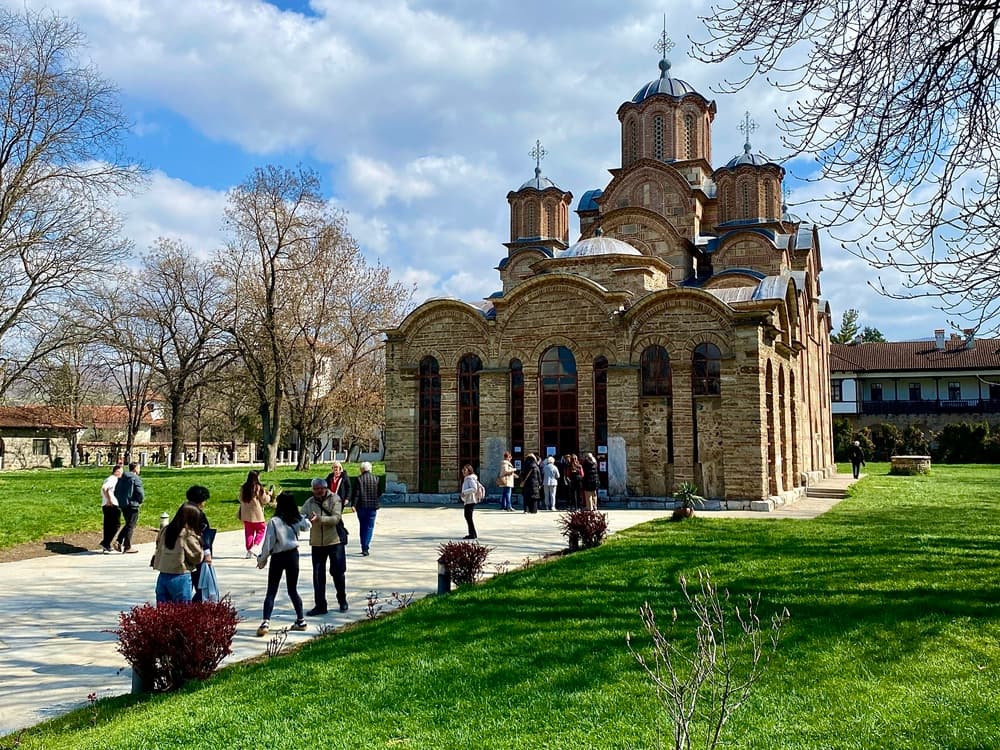
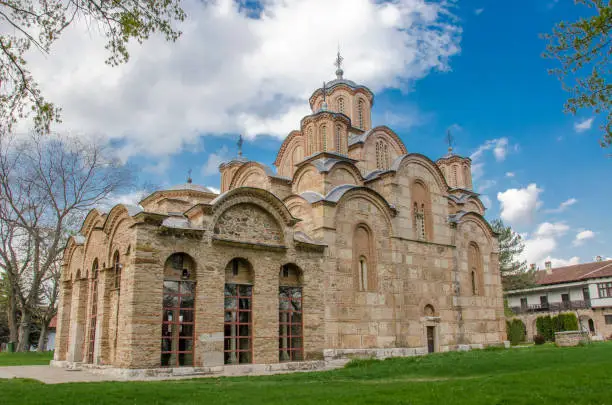
The main church, dedicated to the Dormition of the Virgin, commands attention through its distinctive silhouette: five interconnected domes rising above a Greek cross plan, with facades alternating stone and red brick. Inside, 14th-century frescoes blanket nearly every wall and vault surface. Portraits of saints, Passion scenes, and royal donor representations compose a rare cohesive artistic ensemble.
History and Context
Stefan Milutin commissioned the church's construction between 1311 and 1321 over the foundations of an earlier paleochristian basilica. The architect, likely trained in Constantinople, adopted the early phase of what scholars call the "Morava school" style. The monastery endured Ottoman invasions, earthquakes, and 20th-century conflicts. After 1999, it came under international protection and remains one of the few functioning Serbian Orthodox monasteries in Kosovo.
Highlights of Your Visit
The Medieval Frescoes
Dated to 1321, they are attributed to the workshop of painters Eutychios and Michael, whose work spanned the late Byzantine empire. The Marian cycle in the narthex and portraits of the Nemanjić royal family rank among the finest surviving examples of Byzantine painting.
Exterior Architecture
The western facade best reveals the plan's sophistication: five domes rise in pyramid formation, creating a play of volumes rarely preserved so intact. Take time to walk the entire perimeter to grasp the construction's logic.
The Monastic Enclosure
Convent buildings surrounding the church still house a community of nuns. A small shop offers icons and religious books. The atmosphere remains contemplative, far removed from tourist hustle.
Etiquette and Visiting Guidelines
- Shoulders and knees must be covered for all visitors.
- Headscarf recommended for women inside the church.
- Maintain silence and discretion during services (morning and evening).
- Photography permitted in the outer enclosure; check with the nuns before photographing inside.
- Do not disturb the nuns in their living spaces.
Photography Tips
Morning light before 10 a.m. illuminates the western facade without backlighting. To capture all five domes, step back to the courtyard entrance for the full frame. Inside, natural light filtering through high windows usually suffices; check restrictions before using flash.
Location and Access
The monastery sits in the town of Gračanica, approximately 15 km southeast of Pristina. Regular buses connect Pristina's main bus station to Gračanica. By car, the route is straightforward from the capital's center. The site lies within walking distance—just minutes—from Gračanica's main bus stop. Wheelchair access to the outer enclosure is possible; the church interior has an elevated threshold.
Nearby Attractions
- Pristina City Center — Kosovo's capital, roughly fifteen kilometers away, featuring the Ottoman imperial mosque and bazaar.
- Pristina Imperial Mosque — a 15th-century Ottoman structure, among Kosovo's oldest.
- Kosovo Museum — archaeological and ethnographic collections tracing the region's history.
Frequently asked questions
The site is accessible throughout the year. Hours may vary according to services and Orthodox holidays; arriving in the morning is advisable for an uninterrupted visit.
Yes. Shoulders and knees must be covered. A headscarf is recommended for women inside the church. Pack a shawl in your bag if visiting in summer.
Rules may vary. Ask the nuns present for permission before photographing the interior. Exterior and enclosure photography is generally unrestricted.
The bus journey from Pristina is short. Dedicate your morning to the monastery, then return to the city to explore the imperial mosque and bazaar in the afternoon.
Yes. The monastery has been under international protection since 1999 and regularly welcomes foreign visitors. Simply maintain respectful conduct, as you would in any active place of worship.
Interested in this visit?
We can include it in your personalised itinerary.