Patriarchate of Peć (Serbian Orthodox Monastery of Peć)
Patriarchate of Peć (Serbian Orthodox Monastery of Peć)
Historic seat of the Serbian Orthodox Church, the Patriarchate of Peć comprises four medieval churches adorned with Byzantine frescoes, UNESCO-listed, nestled at the foot of the Rugova Gorge.
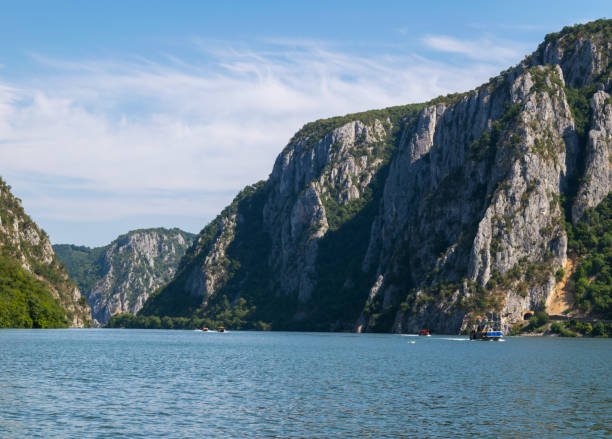
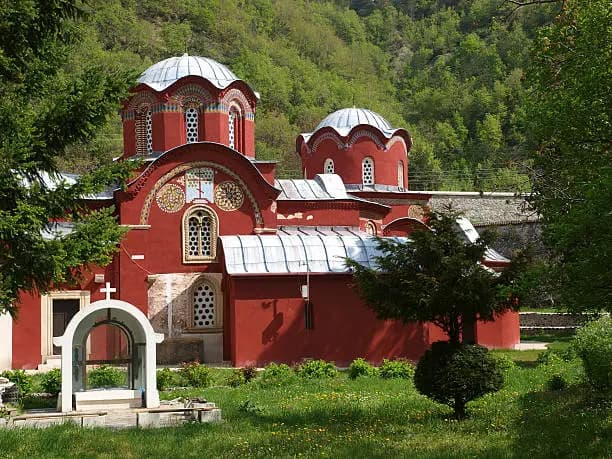
At the foot of the Rugova Gorge, on the outskirts of Peja, the Patriarchate of Peć stands as one of the best-preserved medieval monastic complexes in the Balkans. The historic seat of the Serbian Orthodox Church, it brings together four churches adjoining beneath a single narthex, adorned with Byzantine frescoes spanning the 13th to 14th centuries. The site is inscribed on the UNESCO World Heritage List and remains an active place of worship, tended by nuns.
Quick Facts & Practical Info
- Entry: free for visitors; donations appreciated
- Dress code: shoulders and knees covered; headscarf for women inside the churches
- Suggested duration: 1 to 1.5 hours
- Access: on foot from central Peja (approximately 20 minutes) or by taxi; paved road to the gate
- Accessibility: courtyard accessible, church interiors have high thresholds
- Military presence: the site is protected by KFOR; ID checks possible at the entrance
What to See
The complex comprises four adjoining churches: the Church of the Holy Apostles (13th century), the Church of Saint Demetrios, the Church of the Virgin Hodegetria, and the Church of Saint Nicholas. Their stone facades alternate bands of brick and rubble, typical of the Romano-Byzantine style of medieval Serbia. Inside, frescoes cover walls and vaults: portraits of saints, scenes of the Passion, christological cycles in colours still vivid with time.
History and Context
Founded in the 13th century, the Patriarchate of Peć became the seat of the patriarch of the autocephalous Serbian Orthodox Church in 1346. It played a central role in Serbian religious and cultural identity for centuries, including during Ottoman rule. Listed by UNESCO in 2006 (as an extension of the "Medieval Monuments in Kosovo" site), it remains under international protection due to tensions following the 1998–1999 conflict.
Highlights of Your Visit
The Frescoes of the Church of the Holy Apostles
Dating to the 13th century, they rank among the oldest on the site. The Dormition of the Virgin cycle, on the western wall, illustrates the mastery of Byzantine painters from the Thessalonian school.
The Common Narthex
A transitional space between the four churches, the narthex houses portraits of founders and patriarchs. Here, medieval dynastic and religious continuity emerges most clearly.
The Courtyard and Natural Setting
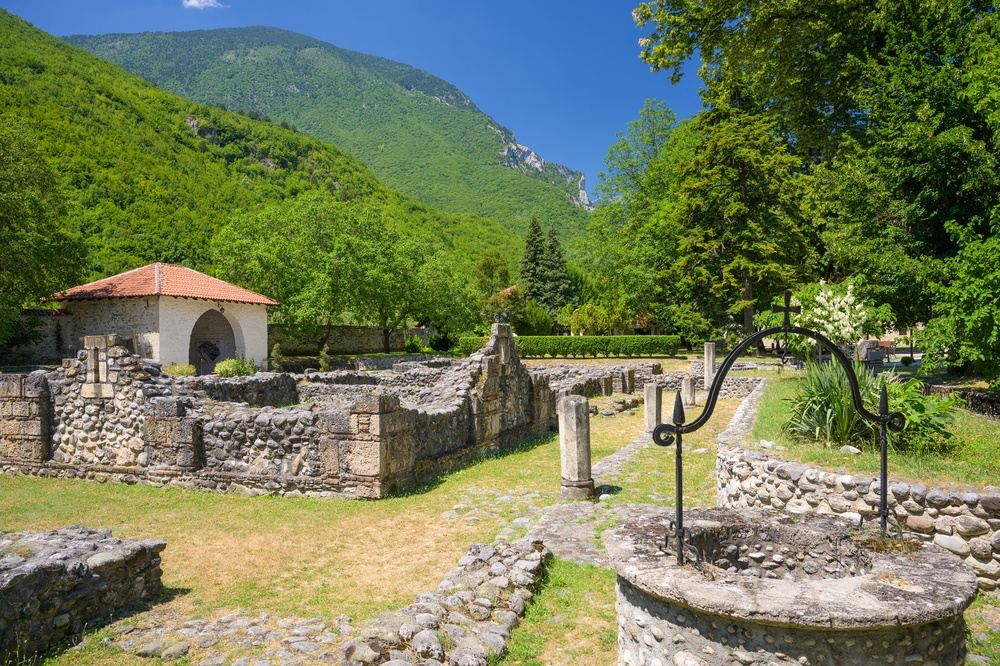
The inner courtyard, shaded and serene, opens onto the forested slopes of the Rugova Gorge. The contrast between ancient stone and mountain landscape creates a rare atmosphere.
Etiquette and Visiting Rules
- Shoulders and knees covered for all visitors.
- Headscarf required for women inside the churches; shawls are sometimes available at the entrance.
- Speak softly in worship spaces; services are held regularly.
- Do not touch frescoes or icons.
- Respect areas reserved for the nuns.
Photography Tips
Morning light illuminates the main façade without backlighting. Inside, photography is generally tolerated without flash — check with the nuns upon arrival. For the frescoes, a bright lens (f/1.8–2.8) compensates for the darkness of the naves without disturbing the atmosphere.
Location and Access
The monastery sits at the northwestern edge of Peja, at the entrance to the Rugova Gorge. From the city centre, the road runs alongside the Lumbardhi River. Taxis are available from Peja's main square. No regular bus service serves the site directly; walking remains the simplest option in fair weather.
Nearby Attractions
- Rugova Gorge — spectacular canyon just beyond the monastery, ideal for hiking and cycling.
- Peja Bazaar — Ottoman covered market in the heart of the city, with local crafts and traditional cafés.
- Bajrakli Mosque of Peja — 17th-century Ottoman mosque, a few minutes' walk from the bazaar.
Interested in this visit?
We can include it in your personalised itinerary.