Visoki Dečani Monastery
Visoki Dečani Monastery
Founded in the 14th century in the White Bistrica valley, Visoki Dečani Monastery houses one of the largest medieval churches in the Balkans and a cycle of Byzantine frescoes recognized as a UNESCO World Heritage site.
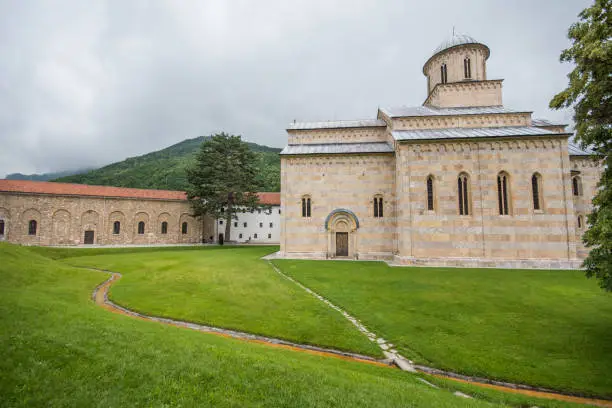
Visoki Dečani Monastery rises in the White Bistrica valley, a few kilometres south-west of Dečani, Kosovo. Founded in the 14th century, it shelters one of the largest medieval churches in the Balkans and a collection of Byzantine frescoes among the best preserved in Europe. A UNESCO World Heritage site, it remains an active Serbian Orthodox monastic community.
Practical information at a glance
- Admission: free for visitors
- Dress code: shoulders and knees must be covered; wraps are available at the entrance
- Suggested duration: 1 to 1.5 hours
- Access: asphalt road from Dečani; parking available in front of the monastery
- Military presence: the site is protected by KFOR (NATO force); security check at entrance possible
What you'll see
The main church, dedicated to Christ Pantocrator, is built in bicolour marble—white and pink—in a rare Romanesque-Gothic style for the region. The interior is entirely covered with 14th-century frescoes depicting over a thousand biblical and hagiographic scenes. The tomb of King Stefan Dečanski, the monastery's founder, lies within the church.
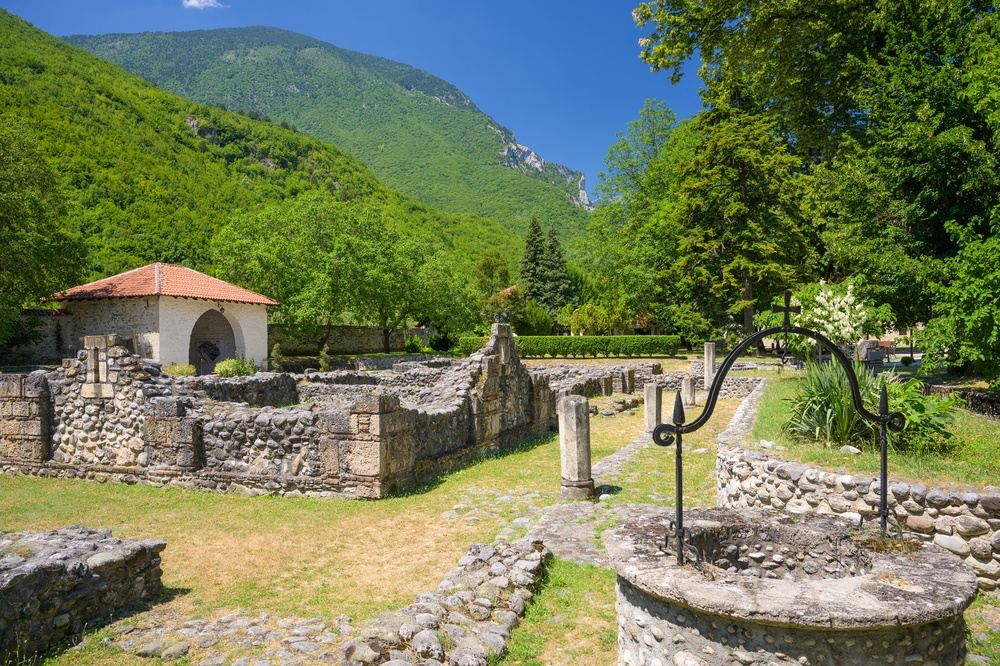
The complex also includes convent buildings, a medieval defensive tower, and gardens maintained by the monks. A monastery shop sells handcrafted items and icons.
History and context
Construction began around 1327 under King Stefan Dečanski of the Nemanjić dynasty and was completed under his son, Tsar Stefan Dušan, around 1335. The church is the work of Master Fra Vita, a Franciscan monk from Kotor, which explains the Western Gothic influence on an fundamentally Byzantine structure. The monastery survived Ottoman invasions and has remained inhabited continuously since its foundation. UNESCO inscribed it as a World Heritage site in 2004 as part of the "Medieval Monuments in Kosovo" site.
Highlights of your visit
The 14th-century frescoes
The fresco cycle covers nearly all interior walls and vaults. The scenes of the Passion, the Last Judgment, and portraits of Serbian saints display remarkable precision and chromatic richness for their time. Some frescoes retain their original pigments.
The tomb of Stefan Dečanski
The sarcophagus of the founder king, canonized by the Serbian Orthodox Church, stands in the nave. It remains an active pilgrimage site: the faithful come to pray and leave offerings throughout the year.
The bicolour marble façade
The alternation of white and pink marble bands, carved portals, and Gothic tracery windows make the façade a unique architectural document in medieval Balkans. Observe the figurative reliefs on the capitals and tympana.
The medieval tower
The defensive tower, built to protect the monastery during periods of instability, stands as testimony to medieval Serbian military architecture. It is visible from the inner courtyard.
Etiquette and visiting rules
- Cover shoulders and knees before entering the church; sarongs are available at the entrance.
- Observe silence inside the church, especially during services.
- Do not touch the frescoes or liturgical objects.
- Respect the monks and pilgrims; avoid loud conversation in the courtyard.
- Services may temporarily restrict access to the church; wait for them to finish before entering.
Photography tips
Natural light filters through the side windows mid-morning, illuminating the frescoes without backlighting. Outside, the façade is best photographed late morning, facing the rising sun to the east. Photography inside the church is generally permitted without flash; check with the monks on the day of your visit, as rules may change.
Location and access
The monastery is located in the White Bistrica valley, approximately 15 km south of Peja (Peć), the nearest town with tourist services. The road from Dečani is asphalt and passable by car. No regular bus service serves the monastery directly; a taxi from Peja or Dečani is the most convenient option. The site is flat within the complex, but full wheelchair accessibility is not guaranteed in all areas.
Nearby attractions
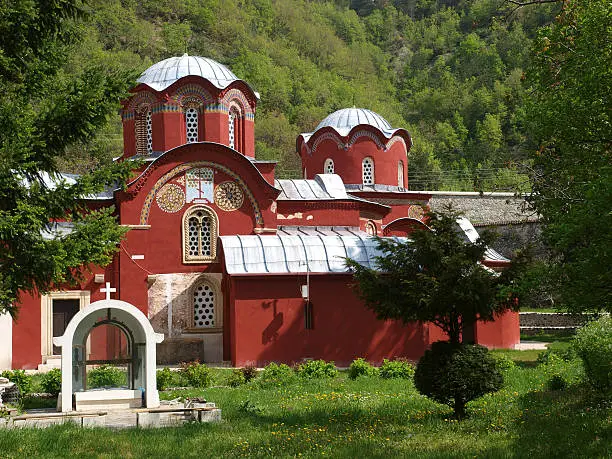
- Patriarchate of Peć — complex of three 13th-century medieval churches, also UNESCO-listed, in Peja.
- Peja (Peć) — town on the Dukagjin plain, starting point for the Rugova Gorge and the Dinaric Alps.
- Rugova Gorge — spectacular limestone canyon west of Peja, ideal for hiking.
Interested in this visit?
We can include it in your personalised itinerary.