Pristina and Central Region
Student capital at 652 metres altitude, UNESCO Gracanica monastery and medieval Novo Brdo fortress: central Kosovo concentrates the essentials in two to three days.
Pristina is our anchor point. Our local agency is based here, and it is from this city at 652 metres altitude on Kosovo's central plateau that most of our itineraries begin. The city has around 200,000 inhabitants, including a significant student population from the University of Pristina, which explains the density of cafés, bookshops and bars along Mother Teresa Boulevard, a pedestrian thoroughfare where social life concentrates in the late afternoon.
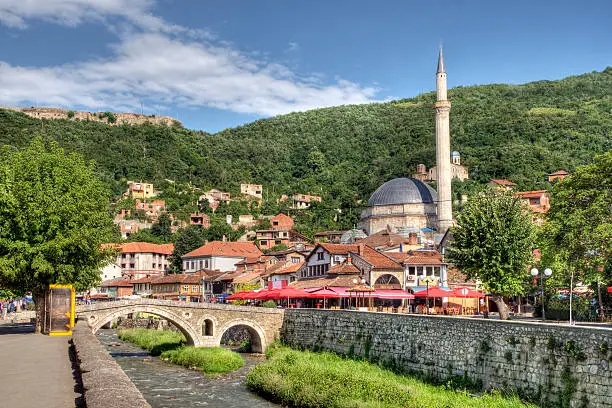
The architecture tells the successive layers of the country's history. The Mosque of Sultan Mehmet Fatih, dating from 1461, neighbours a recently restored Ottoman hammam from the 15th century. A few streets further, the National Library designed by Andrija Mutnjaković in 1982, covered with 99 domes and a metal lattice, remains one of the most debated Yugoslav buildings in the Balkans. The Kosovo Museum, housed in a former Austro-Hungarian building, preserves the Goddess on the Throne, a Neolithic terracotta figurine found in Tjerrtorja that has become the city's emblem.
Around Pristina, central Kosovo concentrates stops that we easily combine into day excursions. Gracanica, 10 km to the south, is home to a Serbian Orthodox monastery built around 1321 by King Milutin, listed as a UNESCO World Heritage site. Its Byzantine frescoes, restored in the 2010s, justify the detour in themselves, and the surrounding village, populated mainly by Kosovo Serbs, operates under KFOR protection. Some 25 km further south-east, Janjevo lines old houses of the Croatian community, present here since the 14th century for mining, some of whom left for Zagreb in the 1990s.
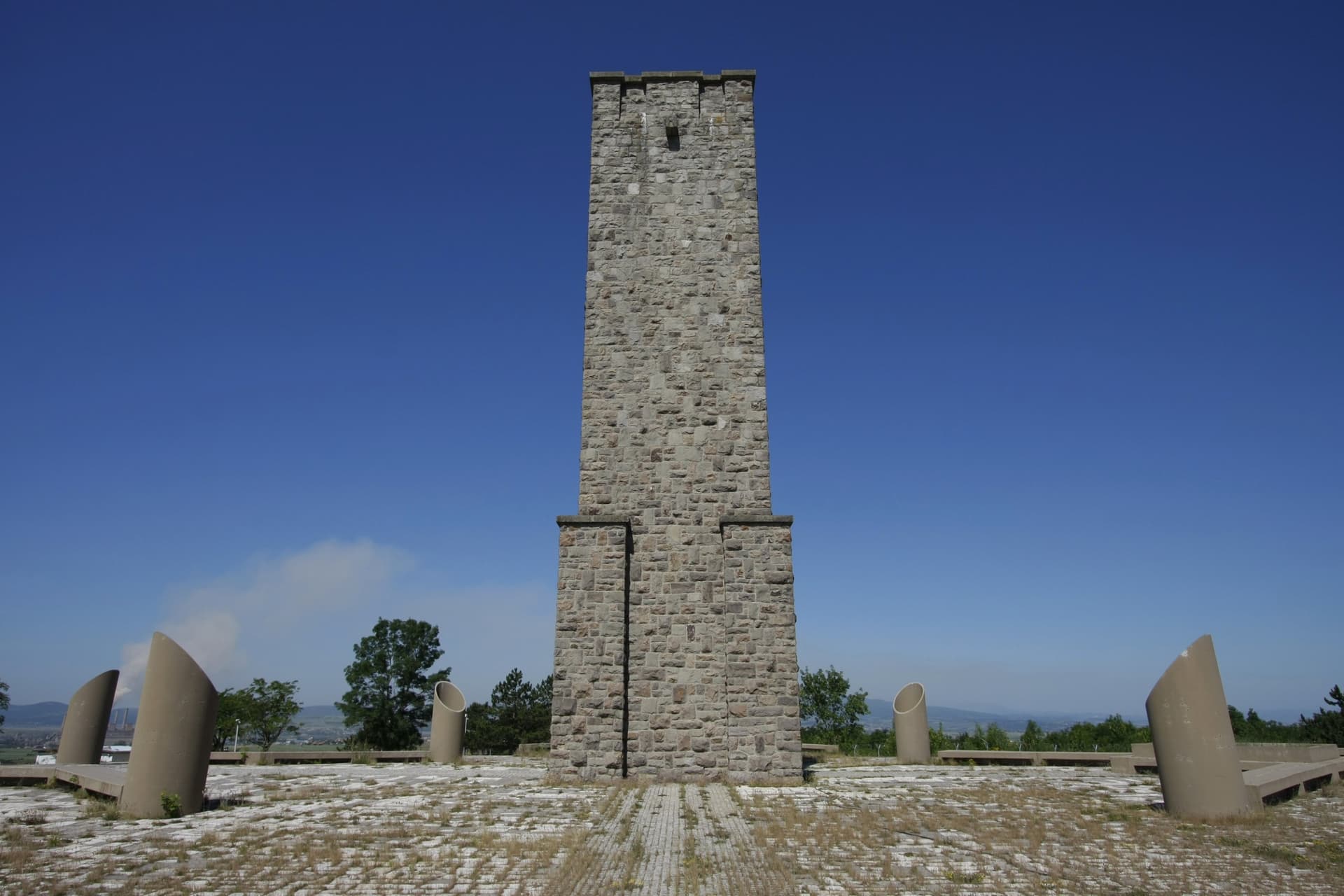
Further east, Novo Brdo stands with the ruins of its medieval fortress on a spur at 1,124 metres. In the 14th century, it was one of the most prosperous places in the Balkans thanks to its silver and lead mines, striking its own coinage. Today the site is silent, walked by shepherds, and offers views stretching to the mountains of Skopska Crna Gora on the Macedonian side. North of Pristina, the plain of Kosovo Polje shelters the mausoleum of Sultan Murad I, who fell during the 1389 battle that drew the region into the Ottoman orbit for five centuries.
At the table, Pristina allows you to taste the full repertoire of Kosovar cuisine. The flija, prepared in successive layers of dough cooked on a saç for two to three hours, is found in several restaurants in the Velania district. The tavë kosi, lamb cooked in a yoghurt and rice sauce, and sarma of cabbage leaves stuffed with meat are served everywhere. Bakeries in the centre sell burek with cheese or meat from 6 am, accompanied by drinkable yoghurt. Coffee, inherited from Ottoman tradition but reformatted by a generation who often studied in Vienna or London, is among the best in the Balkans: the local chain Soma Book Station and roasters on Fehmi Agani Street are its showcase.
The climate is markedly continental. Summers are hot, with highs of 30 to 32°C in July and August, sometimes higher in the city where concrete retains heat. Winters regularly drop below freezing, with snowfall between December and February and temperatures reaching -10°C during cold snaps from the north. Spring and autumn, milder, remain our preferred seasons for exploring this part of the country.
To Discover
Gracanica Monastery. Founded in 1321, its Byzantine frescoes cover almost every square metre of the church. Visit peacefully in the morning before Serbian pilgrim groups arrive.
Mother Teresa Boulevard at dusk. Pristina's pedestrian thoroughfare fills around 6 pm with students, families and chess players set up at folding tables near the national theatre.
Novo Brdo Fortress. Ruins of a medieval mining city at 1,124 metres, accessible on foot from the car park. Thirty minutes of walking among stone towers, without ticket office or turnstile.
Kosovo National Library. 99 white domes and metal lattice façade, completed in 1982. Yugoslav Brutalist architecture that you either love or hate, never indifferent.
Croatian Houses of Janjevo. Perched mining village where a few Croatian Catholic families remain. Cobbled streets, 14th-century St. Nicholas Church, frozen-in-time atmosphere.
When to Go
The best windows for visiting Pristina and the central region are April to June and September to mid-October. Temperatures then range between 15 and 25°C during the day, the gardens of Gracanica monastery are in bloom in spring and orchards on the plain take on colour in October. July and August remain feasible but afternoons at 30-32°C in the city are heavy, and we shift outdoor visits to early morning or after 5 pm.
In winter, from December to February, the central plateau transforms: frequent snow, temperatures of -5 to -10°C during cold spells, secondary roads to Novo Brdo sometimes closed for a few days. It is however a good time for cafés, museums and Orthodox liturgy for Christmas at Gracanica on 7 January. March and November are greyer and more humid, with little appeal unless you combine with a ski stay at Brezovica.
Practical Advice
We recommend 2 to 3 full days in Pristina and its central region. One day is enough for the capital itself, to explore on foot between the Ottoman quarter, Mother Teresa Boulevard and the Kosovo Museum. A second day allows you to combine Gracanica and Novo Brdo by car, a third to venture as far as Janjevo and the Kosovo Polje plain. Adem Jashari International Airport is 18 km from the centre, or 25 minutes' drive, making Pristina the logical starting point for any itinerary in the country.
From here, we usually continue towards Prizren and the south, 1 hour 45 minutes by motorway via the R6, for Ottoman character and Decani monasteries. Peja and the Dinaric Alps are reached in 1 hour 20 minutes and open onto hiking and the Bjeshkët e Nemuna. Mitrovica and the north can be visited as a day excursion to understand the internal border question. Hotel comfort in Pristina is reasonable, expect 60 to 90 € per night in a good-quality hotel, more for design properties. This region suits travellers curious about history and architecture, café culture enthusiasts, less so pure hikers who will find more to the west.