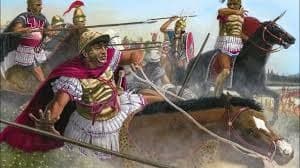
The Chaonians
The Chaonians
An influential tribe of ancient Epirus, the Chaonians left their mark on Butrint, Phoenice and Saranda in southern Albania.
The Chaonians, or Chaones, were among the most influential tribes of ancient Epirus. Their territory covered present-day southern Albania and part of northwestern Greece. Known through the texts of Thucydides, Strabo and Virgil, they left a lasting imprint, still visible today on the archaeological sites of Butrint, Phoenice and Saranda.
Why take an interest in the Chaonians
Taking an interest in the Chaonians means entering a borderland zone of the ancient Greek world, at the edge of Illyria. Their history illuminates the formation of Epirus, cultural exchanges with the Hellenic world, and the gradual Romanization of the region after 170 BC. For the traveller in Albania, this past is not abstract: it reads in the ruins of Butrint, in the remains of Phoenice and in the ancient port of Onchesmos, beneath present-day Saranda.
History and territory
Thucydides, the Athenian historian born around 460 BC and died between 400 and 395 BC, is the first to mention the Chaonians. He describes them as barbarians who had adopted Greek customs and traditions. Later, the geographer Strabo (born around 60 BC, died around 20 AD) notes that, along with the Molossians, they were the most influential of the fourteen tribes of Epirus.
Chaonia occupied the northwestern part of Epirus. According to Strabo, it was bounded to the north by the Ceraunian Mountains and to the south by the Thiamis river. Its capital was Phoenice; its main port, Bouthroton (present-day Butrint), overlooked the Ionian Sea, while Onchesmos (present-day Saranda) was another major maritime outlet. To the south, the Chaonians shared their border with the Molossians, to the southwest with the Thesprotes, and to the north with Illyria, populated by tribes whose exact links with present-day Albanians remain debated by historians.
The border zone with Illyria was long disputed. Pseudo-Scylax, a Greek author of the 4th or 3rd century BC, places the city of Oricum, at the foot of the Ceraunian Mountains, as the northern limit of Chaonia. Ptolemy, later on, indicates that this same city was occupied by the Chaonians.
Around 325/320 BC, the Chaonians joined the Epirote League, strengthening a federal state that became a regional power. The alliance lasted until the Roman conquest of Epirus in 170 BC.
Language
Epigraphic evidence found in the region attests to the use of the Doric dialect, one of the four major dialects of ancient Greek. The exact linguistic status of the Chaonians remains debated: some scholars favour a fully Greek-speaking population, others evoke an Illyrian substrate or a mixed situation. Historian N.G.L. Hammond notably argued that the Chaonians' integration into the Epirote League was strong evidence in favour of Greek use.
Political structure
In the 5th century BC, the Chaonians formed a tribal state, organized not as a city-state but as a network of villages. Their leaders were elected annually and designated, in the 4th century BC, by the term prostates (Προστάτης, "chief"), as in most Greek tribal states of the period.
Religion
Like all Epirote peoples, the Chaonians frequented the sanctuary of Dodona, dedicated to Zeus and Dione. They also venerated Athena, Artemis, Asclepius, Pan, Poseidon and Heracles. At Bouthrotos, Zeus bore the epithet Soter ("saviour") and was invoked by sailors before departure.
Economy
Chaonia was renowned for its pastoral life, particularly in the Roman era. Virgil praises it in the Georgics, and other Latin poets evoke a bucolic atmosphere comparable to that of Arcadia. Roman businessmen settled there and developed large agricultural estates. Titus Pomponius Atticus, one of the most famous, owned 120 herds of cattle and a horse stud in Chaonia. Chaonian coins unearthed at Phoenice testify to the tribe's prosperity and commercial openness.
What to see today on Chaonian lands
- Butrint: ancient Bouthroton, the main Chaonian port, now a UNESCO World Heritage site. Ancient theatre, paleochristian baptistry, ramparts and sanctuary of Asclepius are visible there.
- Phoenice (Finiq): ancient capital of Chaonia, about twenty kilometres north of Saranda. Remains of the acropolis, cisterns, agora and theatre.
- Saranda: seaside resort that covers the ancient Onchesmos. A few remains of a basilica and ancient walls subsist in the urban fabric.
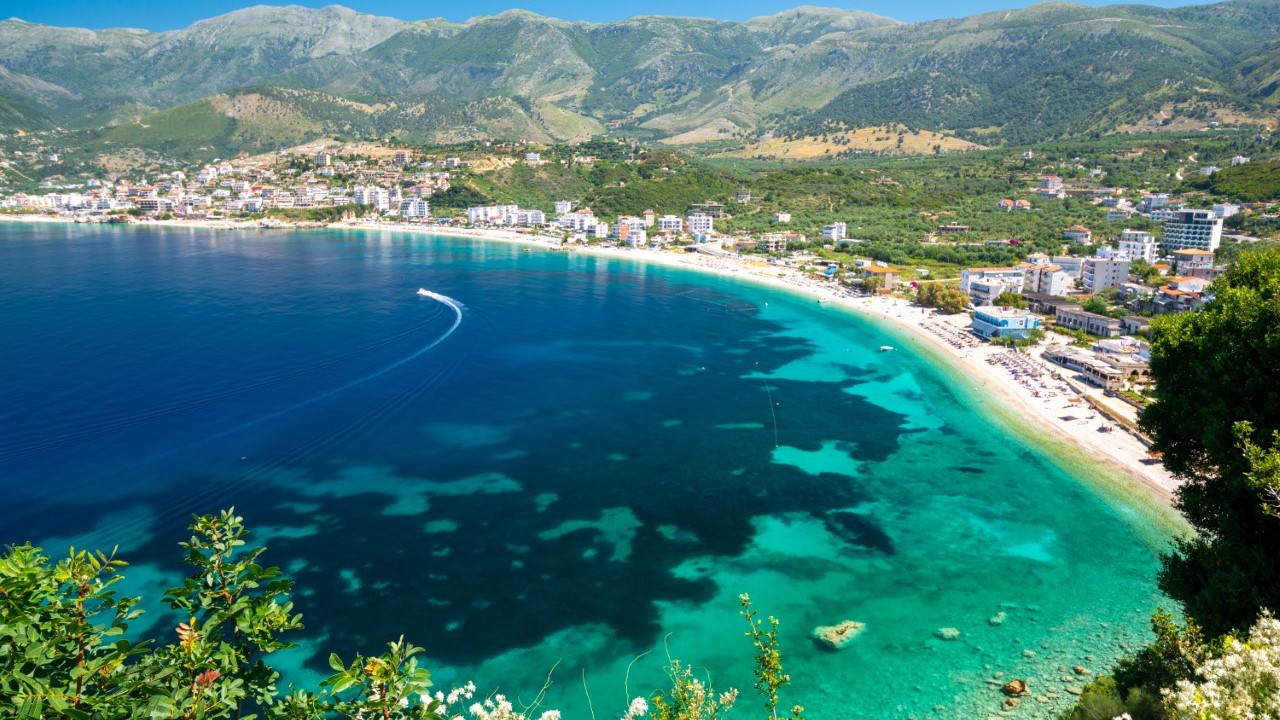
- Ceraunian Mountains: ancient northern border of Chaonia, today a spectacular landscape axis of the Albanian Riviera.
Practical information
- When to visit: April to June and September to October, to enjoy the archaeological sites without summer heat or August crowds.
- Base of operations: Saranda, which allows you to reach Butrint in less than 30 minutes and Phoenice by car.
- Recommended duration: allow half a day at Butrint, 1 to 2 hours at Phoenice, and a full day if you combine both with Saranda.
- Rates: moderate entrance fee for Butrint (paid site), free or nominal access for Phoenice. Rates to be verified on site.
- Advice: bring closed shoes, water and a hat, as the sites are poorly shaded.
Nearby
- The Karaburun Peninsula, at the northern tip of the Ceraunian Mountains, ancient border of Chaonia.
- Germenj-Shelegur National Park, to continue discovering the Epirote hinterland.
- Korçë Archaeology Museum, a useful complement to contextualize the ancient civilizations of Albania.
Frequently asked questions
Frequently asked questions
The major sites are Butrint (ancient Bouthroton), Phoenice (Finiq, former capital) and, to a lesser extent, Saranda (Onchesmos). All are located in the south of the country, near the Greek border.
The debate remains open. Epigraphic evidence shows the use of the Doric dialect, and their integration into the Epirote League argues for a strong link with the Greek world. Some scholars, however, evoke an Illyrian substrate or a mixed identity at the margins of the Hellenic world.
A full day from Saranda allows you to combine Butrint (half day) and Phoenice (1 to 2 hours). Archaeology enthusiasts can spread the visit over two days.
Spring (April-June) and early autumn (September-October) offer the most pleasant conditions: mild temperatures and moderate attendance at the archaeological sites.
Plan your trip
The lands of the Chaonians form a fascinating thread for exploring southern Albania between ancient heritage and Ionian coastline. To integrate Butrint, Phoenice and the Riviera into a bespoke itinerary, consult our trips to Albania.
Interested in this visit?
We can include it in your personalised itinerary.