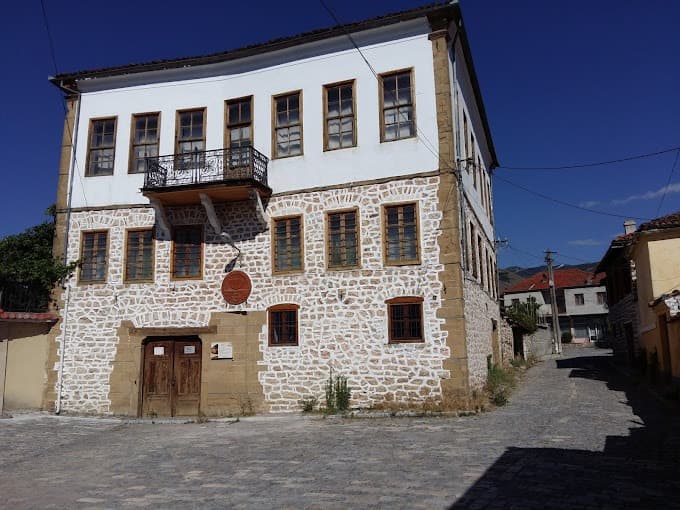
Korçë Archaeology Museum
Korçë Archaeology Museum
Housed in an 1842 Ottoman konak, the Korçë Archaeology Museum displays approximately 1,200 artifacts tracing human occupation of the Korçë basin from the Neolithic to the Middle Ages.
Set within a historic konak Ottoman mansion dating to 1842, the Korçë Archaeology Museum (Muzeu Arkeologjik i Korçë) brings together roughly 1,200 artifacts that chronicle human settlement in the Korçë basin, spanning from the Neolithic through the Middle Ages. A brief yet richly layered visit that reveals the historical depth of southeastern Albania.
Why visit this museum
The Korçë basin ranks among Albania's most archaeologically significant regions, with numerous prehistoric sites. The museum centralizes finds from regional excavations and presents, across just a handful of galleries, a coherent chronological narrative of the civilizations that flourished here: prehistoric, Illyrian, Greek, Roman, Byzantine, and medieval.
The building itself commands attention: an Ottoman konak from the 19th century, a fine example of traditional residential architecture thoughtfully adapted for museum use. A complete visit takes roughly 1 to 1.5 hours, making it an easy addition to any stay in Korçë.
Museum and building history
The konak housing the collections was built in 1842, when Korçë was establishing itself as a major commercial and cultural hub of the region. The museum was founded in 1985 and underwent restoration in 1990 to adapt its spaces for proper artifact conservation and display.
Beyond its exhibitions, the institution functions as a research center: it collaborates with Albanian and international universities, participates in archaeological campaigns across the region, and publishes scholarly work on the archaeology of the Korçë basin.
What to see in the collections
The prehistoric section
This is the museum's heart. Most pieces come from the sites of Maliqi, Potgoria, Dunavesi, and Trajani, excavated since the mid-20th century. The collection spans an extensive chronological sequence, from the Neolithic through the Iron Age:
- stone tools and ceramic fragments
- pins, figurines, and ritual objects
- bronze jewelry and ornaments
The most striking piece is the skeleton of a pregnant woman, over 5,000 years old, unearthed from the Kamenica tumulus. This burial sheds light on the funerary practices of the region's Neolithic communities.
Illyrian and Greek sections
The Illyrians, the Balkans' indigenous peoples, are represented through bronze weapons, jewelry, ceramics, and decorative elements. The Greek section displays pottery, sculpture, inscriptions, and coins from the Greek city-states active in the region, bearing witness to commercial and cultural exchange between these two worlds.
Roman, Byzantine, and medieval sections
The Roman period is illustrated through mosaic fragments, fresco elements, and coins, documenting the area's integration into the Empire's economic network. The Byzantine and medieval galleries assemble crosses, icons, liturgical objects, manuscripts, and everyday artifacts—markers of Christianization and Byzantine culture across this corner of the Balkans.
Practical information
The museum is open Tuesday through Sunday, closed Mondays. Hours typically cover the morning and early afternoon (shorter hours on Sundays); it's advisable to check current opening times locally or at the tourism office before your visit.
Admission is modest, in line with Albanian municipal museums. Group guided tours can be arranged. A small shop stocks books on Albanian archaeology and a few artifact replicas.
Allow 1 to 1.5 hours to explore all sections at a leisurely pace.
How to get there
On foot
The museum sits in Korçë's historic center, roughly a 20-minute walk from the main bus station. From the old bazaar or the Orthodox cathedral, it's reachable within minutes.
By taxi
Taxis are plentiful and inexpensive in Korçë. A ride from the bus station or a peripheral hotel is very short.
By car
If arriving by rental car, follow signs toward the city center and old bazaar. Parking is available on nearby streets.
Nearby attractions
A museum visit combines well with other sites in central Korçë and with broader Albanian itineraries:
- the Iljaz Bej Mirahori Mosque, among the city's oldest Ottoman monuments
- the Saint Naum Monastery, on the shores of Lake Ohrid
- the Germenj National Park, accessible from Korçë for a day of nature and hiking
- the National Historical Museum of Tirana, a useful complement for viewing Korçë's collections within the national context
Frequently asked questions
Frequently asked questions
Plan for 1 to 1.5 hours to walk through all six sections (prehistoric, Illyrian, Greek, Roman, Byzantine, and medieval) at a comfortable pace.
No, it is closed on Mondays. It welcomes visitors Tuesday through Sunday, with shorter hours on Sunday. Verify current opening times before heading out.
The skeleton of a pregnant woman over 5,000 years old, discovered in the Kamenica tumulus, is among the most notable pieces in the prehistoric collection.
Most pieces originate from archaeological sites within the Korçë basin, notably Maliqi, Potgoria, Dunavesi, Trajani, and the Kamenica tumulus.
Yes, guided tours can be arranged, particularly for groups. It's best to inquire in advance to confirm availability.
Extending your visit in Albania
Korçë serves as a gateway to southeastern Albania and its mountainous landscapes. To build a comprehensive itinerary blending heritage, archaeology, and nature, explore our Albania journeys.
Interested in this visit?
We can include it in your personalised itinerary.