Shkodra
Shkodra
At the foot of the Albanian Alps, Shkodra blends 2,400 years of history, a Balkans lake, and direct access to Theth. Your complete guide to planning your stopover.
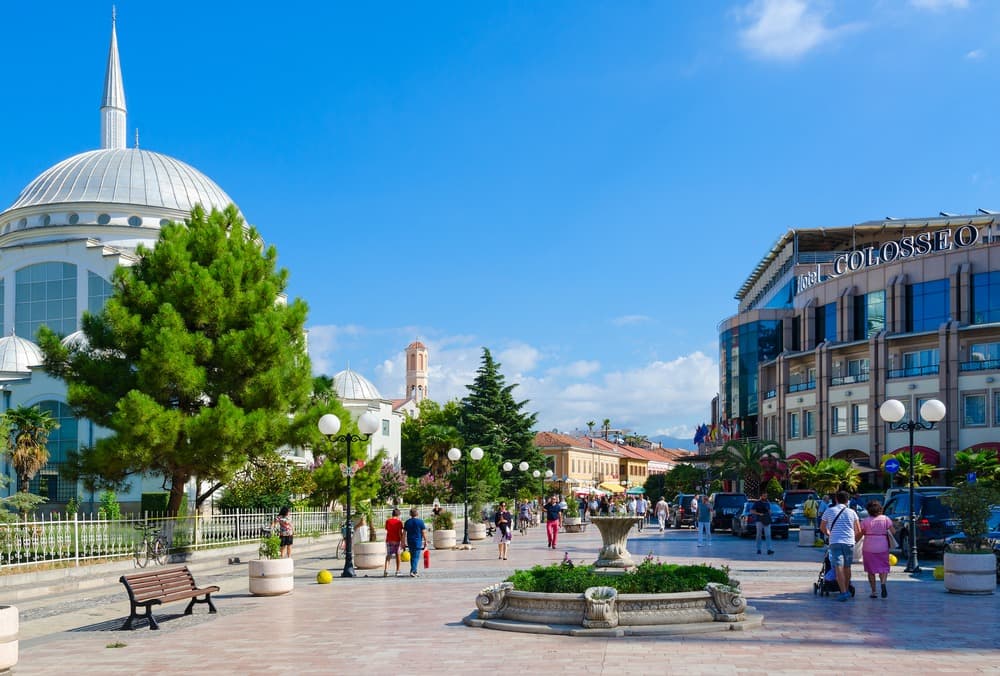
Discover the soul of Albanie: Shkodër! With its stone houses weathered by time, monuments laden with history, and narrow streets, this ancient city leaves visitors captivated. It stands as a premier cultural destination, showcasing a fine example of religious tolerance in Albanie.
History
Shkodër owes its origins to the Illyrian tribes of the Labeatae or Ardiaei. Discoveries made in the remains of Rozafa Castle attest to this distant past. The city, also known as Shkodra, developed on a hillside. It came under the control of Roman forces under Anicius Gallus in 168 BCE, before the administrative reform under Emperor Diocletian. Byzantine conqueror Justinian officially founded the city in 535, coinciding with the expansion of Christianity. It was a strategic stronghold, owing to its proximity to Italian port cities and the Adriatic Sea, at the crossroads of numerous important trade routes.
Shkodër Today
Shkodër lies nestled in the heart of the Mbishkodra plain, in the foothills of the Albanian Alps. The local mountainous landscape is largely composed of dolomitic and limestone rock. The city, traversed by the rivers Buna, Kir, and Drin, lent its name to nearby Lake Shkodra, which is the largest lake in southern Europe near the Adriatic Sea. Economically, it is a thriving city where machinery manufacturing plants, textile and electronics industries, and food enterprises are flourishing.
A City Rich in Monuments
Rozafa Castle, erected in the 3rd century BCE, stands as the most visited local tourist attraction. The building houses a small museum whose collection includes Ottoman weapons, Illyrian coins, and various everyday objects. Every year at the end of March, the Lojra Popullore traditional games festival celebrates north-Albanian folklore at Rozafa Castle. Behind the fortress stands the Lead Mosque of Shkodër, named after the distinctive feature of its walls. The rocks used to construct the facades were assembled with molten lead. Another important religious monument, Saint Stefan Cathedral is the city's principal Roman Catholic church. Don't miss the statue of Mother Teresa, depicting the nun with her hands crossed over her chest to symbolize her unwavering faith throughout her life. The Shkodër Historical Museum was established in the residence of an Ottoman merchant. You'll find numerous archaeological artifacts and old photographs illustrating the evolution of life in the region. Approximately 5 km from the city, the Mes Bridge over the Kir river ranks among the world's oldest Ottoman bridges. There were originally three spans, but only one has withstood the test of time. This one measures 108 m.
Around Shkodër
Take an excursion to Lake Shkodra. You can reach it by bus. The shores of the Balkans' largest lake offer a beautiful walk that will certainly delight nature lovers and photography enthusiasts. Then try canoeing tours or romantic strolls along the Buna river.
Another noteworthy destination, the Vau i Dejës Reservoir, fed by the Drin river, is home to Shurdhah Island. Tourist boats can take you to this patch of land which preserves the remains of the medieval city of Sarda. Don't miss the castle ruins dating from the 11th century, defensive towers, and the ancient Byzantine church.
Climate
Köppen and Geiger classify Shkodër's climate as Mediterranean, marked by continental influences and a fairly humid season in July. Throughout the year, average temperatures range between 14.5°C and 16.8°C. January is the coldest month, with temperatures varying from 1.4°C to 9.8°C, while August is the warmest—temperatures can reach up to 32.4°C. The average annual precipitation rate reaches 1,700 mm, ranking Shkodër among Europe's most humid regions.
Travel by bus to Shkodër from Tirana (116 km) takes approximately two hours. Minibuses connect the city to Velipojë, Koman, Kelmend, and Thethi. Buses also serve Shkodër from Montenegro, from Ulcinj and Podgorica, and from Kosovo, from Gjakova via the Prizren highway.
The flat terrain in Shkodër makes it Albania's bicycle capital. Nevertheless, navigating with the streets and attractions named can be tricky. Make sure you have a map. Buses circulate throughout the city.
What to Do in Shkodër?
- Explore the Rozafa Fortress
- Visit Saint Stefan Cathedral
- Enjoy views over Lake Shkodra
- Go canoeing on the Buna river
- Discover Shurdhah Island in the Vau i Dejës Reservoir, and more.
Want to discover this destination?
Our local advisors design your tailor-made trip.