Skopje
Skopje blends Ottoman bazaar, medieval fortress, and controversial neoclassical architecture. Two to three days are enough to explore its two riverbanks and contrasting neighborhoods.
Skopje is the capital of northern Kosovo — no, of North Macedonia. A quick note: the country code shown is KO (Kosovo), but Skopje is the capital of North Macedonia (MK). The city lies in the Axios (Vardar) valley, framed by Kale Fortress and Mount Vodno. It blends Ottoman bazaars, Byzantine churches, neoclassical monuments, and spectacular contemporary architecture from the Skopje 2014 project.
Practical Information at a Glance
- Access: Skopje International Airport (SKP) about fifteen kilometers from the city center; bus and taxi connections available.
- Urban transport: dense bus network; taxis and ride-sharing apps available.
- Recommended duration: two to three days to cover the main neighborhoods.
- Currency: Macedonian denar (MKD); cards accepted at most establishments in the center.
- Language: Macedonian and Albanian; English is common in the tourism sector.
What to See
The historic center is divided into two riverbanks connected by the Stone Bridge (Kameni Most). On the south side, Macedonian Square concentrates statues and buildings from the Skopje 2014 project. On the north side, the Old Bazaar (Čaršija) is one of the largest still-functioning Ottoman markets in the Balkans, with its caravanserais, mosques, and artisan workshops.
- Kale Fortress: medieval ramparts overlooking the city, panoramic views of the Vardar.
- Mosque of Mustafa Pasha (15th century): classical Ottoman architecture, interior garden.
- Church of Saint Clement of Ohrid (Sveti Kliment): remarkable Byzantine frescoes.
- Museum of Macedonia: archaeological and ethnographic collections.
- Mother Teresa Memorial: born in Skopje, she is honored in a modern commemorative center.
History and Context
Skopje has been inhabited since the Neolithic period. A Roman colony under the name Scupi, it became a Byzantine center before falling under Ottoman rule in 1392, a period that durably shaped its urban fabric. A devastating earthquake in 1963 destroyed much of the modern city; its reconstruction, overseen by Kenzo Tange, gave it its characteristic brutalist character. The Skopje 2014 project, launched after independence, superimposed a controversial neoclassical layer onto this landscape.
Highlights of Your Visit
The Old Bazaar (Čaršija)
A preserved Ottoman quarter, Čaršija houses dozens of mosques, caravanserais converted into galleries or hotels, and artisan shops (copper, leather, filigree). The atmosphere here is radically different from the neoclassical center, just a five-minute walk away.
Kale Fortress
Perched on a rocky outcrop, Kale offers the best views of the confluence of the Vardar and Serava rivers. The current ramparts date primarily from the Byzantine and Ottoman periods. Access is free and the climb takes about twenty minutes from the bazaar.
The Stone Bridge and Macedonian Square
The Stone Bridge (14th-15th century) symbolically connects the two riverbanks and the city's two identities. Macedonian Square, with its monumental fountain and equestrian statues, illustrates the ambition—and contradictions—of the Skopje 2014 project.
The Mother Teresa Memorial
Agnès Gonxha Bojaxhiu, the future Mother Teresa, was born in Skopje in 1910. The commemorative center, built on the site of her baptism, traces her life through photographs, personal objects, and a chapel open to all.
Etiquette and Visiting Rules
- Mosques: clothing covering shoulders and knees required; shoes must be removed at the entrance.
- Orthodox churches: decent attire recommended; avoid visiting during services.
- Bazaar: haggling is customary for handicrafts; respect prayer spaces within shops.
Photography Tips
- Kale Fortress in late afternoon: golden light on the bazaar roofs and the Vardar.
- The Stone Bridge early in the morning, before the influx of visitors.
- Inside mosques and churches: ask for permission before photographing.
- Macedonian Square at night: illuminated fountains create a striking contrast with the architecture.
Location and Access
Skopje sits in the Vardar valley, about 90 kilometers from the Kosovo border and 170 kilometers from Sofia. The historic center is compact and largely walkable. Kale Fortress is accessible on foot from the bazaar; Mount Vodno can be reached by bus or cable car from the Sredno Vodno neighborhood.
From Pristina (Kosovo), regular buses connect the two capitals in approximately two hours.
Nearby Attractions
- Mount Vodno — wooded hill overlooking Skopje, with the Millennium Cross visible from across the city.
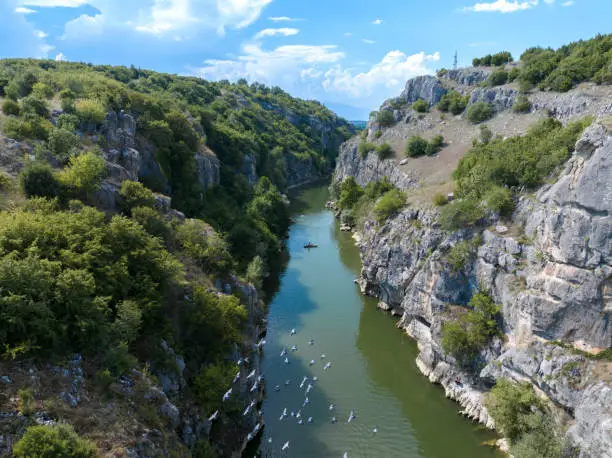
- Matka Canyon — Treska River gorges about twenty kilometers away, ideal for hiking and kayaking.
- Ohrid — UNESCO-listed lakeside town, approximately three hours' drive to the southwest.
- Saint Naum Monastery — medieval monastic site on the shores of Lake Ohrid.
Frequently asked questions
Spring (April-May) and autumn (September-October) offer pleasant temperatures and fewer tourists. Summer is hot and lively; winter is cold but rarely snowy in the city.
Two days are enough for the historic center, bazaar, and main museums. Add an extra day for Matka Canyon or Mount Vodno.
Yes. Regular buses connect Skopje to Pristina in approximately two hours. The two capitals complement each other well on a Balkan itinerary.
For mosques, shoulders and knees must be covered, and shoes must be removed at the entrance. For Orthodox churches, decent attire is expected.
Čaršija is well-frequented and generally safe during the day. As in any busy market, stay alert to your belongings in heavily trafficked areas.
It is often tolerated but not always permitted. Always ask for permission on site before taking out your camera.
Want to discover this destination?
Our local advisors design your tailor-made trip.