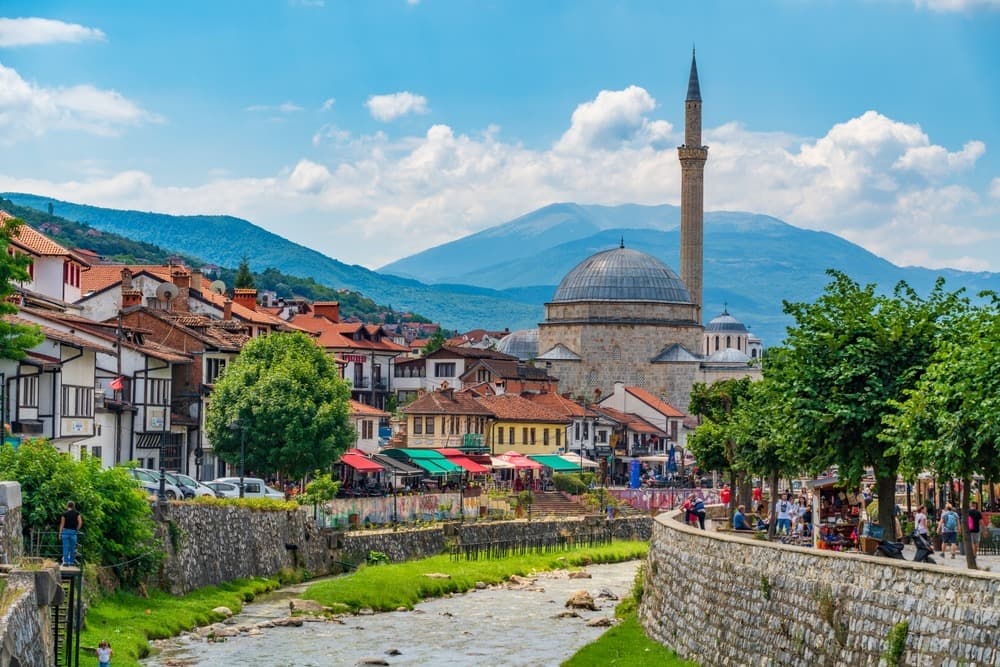
Why Visit Kosovo for Your Next Vacation?
Looking for an off-the-beaten-path destination, easily accessible from France and still relatively undiscovered by tourists? Why not choose Kosovo?
Looking for an off-the-beaten-path destination, easily accessible from France and still relatively undiscovered by tourists? Why not choose Kosovo? This small Balkan country, still little-known, combines stunning landscapes, thousand-year-old cultural heritage, generous gastronomy and exceptional hospitality. In this article, discover why Kosovo deserves to top your list for your next getaway.
1. To Experience Total Escapism Just Hours from Paris

Nestled in the heart of the Balkans, between Montenegro, Albania, North Macedonia and Serbia, Kosovo is very easy to access. It's the perfect destination for genuine escapism without spending long hours on a plane.
From France, the capital, Pristina, is served by several European airlines with just one connection. While there's no regular direct flight from Paris, quick connections via Zurich, Vienna, Istanbul or Belgrade allow you to arrive in approximately 4 to 5 hours of travel (including stopover).
In just a few hours, you can therefore change your scenery, leave the familiar setting of Western Europe and dive into a country of mountains and valleys, with a rich and unique cultural identity.
💡 Good to know:
Kosovo does not belong to the European Union or the Schengen area, although it is recognized by most EU countries. It has been a candidate for accession since 2022.
It's worth noting that the country uses the euro as its official currency, which greatly facilitates the lives of European travelers: no exchange rate surprises or additional fees related to currency conversion.
2. To Enjoy a Budget-Friendly Trip
Kosovo is one of Europe's most affordable destinations. Accommodation, dining, activities: everything is far less expensive than in most neighboring countries.
In Pristina or Prizren, you'll easily find comfortable hotels at unbeatable rates (between €10 and €15 in youth hostels and between €30 and €80 for a night in a mid-range hotel or guesthouse). Local restaurants also allow you to eat for just €5 to €10 per person.
Public transport, particularly buses linking major cities and mountain villages, is also very affordable. For travelers seeking freedom, renting a car remains budget-friendly and allows you to explore the country at your own pace.
This cost level not only allows you to extend your stay but also diversify it: you can combine culture, nature, comfortable accommodations, sometimes a touch of luxury, without breaking the bank. Traveling to Kosovo means choosing a rare kind of freedom—the freedom to not have to sacrifice beauty for price.
3. To Discover an Unspoiled Destination Off the Beaten Path

Traveling to Kosovo means crossing an invisible border, the one that separates familiar Europe from secret Europe. Here, no tour buses, no string of international chains or crowded sites: the country is among the last in Europe where you can experience a truly off-the-beaten-path journey.
Traveling to Kosovo means rediscovering what mass tourism has erased elsewhere: the surprise of encounters, the feeling of exploring untouched territory, the impression of having a corner of Europe all to yourself. For those seeking an authentic experience, traveling to Kosovo means answering the call of travel in its truest form: discovering the other, the world, and yourself.
4. To Enjoy a Wide Variety of Landscapes

Despite its small size, Kosovo unfolds a diversity of landscapes that surprises at every turn.
To the south, the Sharr Mountains offer alpine panoramas, deep forests and hiking trails where you might walk for hours without meeting another soul. To the west, the Accursed Mountains massif and the Rugova Valley reveal vertiginous gorges, limestone cliffs and spectacular waterfalls.
Further central, close to Pristina, the lakes of Batllava and Badovc invite relaxation and water activities. Not far away, in Gadime, stands the famous marble cave, a fascinating underground treasure for caving enthusiasts. In the southwest, near the border with Montenegro, lies the mountain resort of Brezovica, popular in winter for skiing and in summer for hiking and mountain biking.
Finally, northern Kosovo, often overlooked, surprises with its verdant hills, sprawling forests and picturesque villages stretching along the Ibar River; those seeking tranquility will find pastoral panoramas and nearly secret hiking trails here.
This variety of landscapes, from north to south, makes Kosovo a true condensation of the Balkans, offering every visitor a journey through still-preserved and surprising scenery.
5. To Travel Through Centuries of History and Tradition

Kosovo is far more than just a natural backdrop: it's a genuine mosaic of history and cultures, where every stone, every monastery and every street tells stories spanning centuries.
The country was the site of the 1389 battle, a symbolic summit in Serbian history, whose cultural and political reverberations are still felt today. Under Ottoman rule, Kosovo was a crossroads of influences and traditions, as evidenced by its majestic mosques, picturesque bazaars and stone bridges that blend vernacular architecture with Oriental styles.
The Orthodox monasteries listed as UNESCO World Heritage sites, such as Dečani, Gračanica and Peć, reveal the refinement of medieval art and the spiritual depth of the country. The museums of Pristina and Prizren, meanwhile, showcase the archaeological layers of a territory occupied for millennia, retracing both Antiquity, the Middle Ages and the upheavals of modern times, from Yugoslavia to the ethnic tensions of the late 20th century, through to the declaration of independence in 2008.
It's this constant dialogue between past and present, between Ottoman, Serbian and Albanian cultures, between traditions and contemporary aspirations, that makes Kosovo so culturally rich.
💛 Did you know?
Kosovo stands out for a centuries-old tradition of religious tolerance. Although the majority of the population is of Muslim faith (mostly Sunni), the country also welcomes Orthodox Christian and Catholic communities. Religious conflicts are rare, and peaceful coexistence among different faiths is integral to Kosovo's identity.
The city of Ferizaj, where mosques and churches stand side by side, is a perfect example.
6. To Enjoy a Wide Range of Activities Traveling Solo, as a Couple, with Family or Friends

Kosovo proves to be a multi-faceted playground capable of satisfying all the desires of travelers.
Hiking enthusiasts will find their paradise in the Sharr Mountains, walking trails bordered by forests and alpine meadows, or along the Via Dinarica, this great route crossing the Balkans and offering spectacular panoramas at each stage.
Winter sports enthusiasts can venture to Brezovica, a still-unspoiled resort where skiing and snowboarding are practiced amid wild landscapes, while thrill-seekers can paraglide over the Rugova gorges or descend mountain trails on mountain bikes. Those who prefer relaxation can head to the areas around Batllava or Badovc lakes to lounge, swim and surrender to contemplation.
As for history and culture enthusiasts, they can wander through museums, visit centuries-old monasteries and attend festivals that mark the life of major cities. Prizren, for instance, often cited as Kosovo's most beautiful city, hosts regionally renowned cultural festivals, art exhibitions, traditional and contemporary music and numerous typical cafés where it's pleasant to sit and observe local life while immersing yourself entirely in Kosovo's cultural soul.
7. To Taste Delicious Local Specialties

Traveling to Kosovo also means taking your taste buds on a journey. Kosovar cuisine reflects its history: rich in blends. Albanian, Ottoman and Balkan influences are found in simple and generous dishes. From market flavors to family meals, each bite tells a story and transports the visitor to the heart of Kosovar culture.
🍽️ Kosovo's culinary specialties you absolutely must taste:
Byrek (or burek): a pastry filled with cheese, spinach or meat, enjoyed at any time of day.
Flija: a traditional dish considered the national dish. It consists of multiple layers of crêpes, each covered with cream.
Sarmas: cabbage or vine leaves stuffed with meat and rice, flavored with local herbs.
Pasul: a white bean stew often served with meat.
Grilled meats and kebabs: local meats grilled over wood fire, simple and flavorful.
Qebapas: small grilled meat sausages, served with onions and traditional bread.
Baklava and Halva: sweet pastries inherited from the Ottoman Empire, perfect with a strong Turkish coffee.
8. To Meet an Ultra-Warm People

Beyond landscapes and history, what profoundly marks travelers who visit Kosovo are encounters with the inhabitants, renowned for their remarkable hospitality.
In this still-touristy country, you'll be offered tea, conversation, a smile, coffee served in a shaded courtyard, a piece of homemade bread, simply because you've crossed a path, asked for directions or shown curiosity.
This pure and spontaneous kindness, far from being staged, is rooted in a centuries-old tradition of welcome. It's all the more noticeable in rural or mountainous regions, where inhabitants are delighted to talk about their country, share their customs, craftsmanship, cuisine and songs.
In the end, many travelers leave Kosovo with new contacts, shared memories and the desire to return—proof that here tourism remains a matter of connection and human encounter.
So, Is It Worth Visiting Kosovo?
Traveling to Kosovo means not taking the most well-trodden path, but rather choosing an unexpected and preserved destination. It's the promise of a journey that takes you out of the ordinary, offering complete escapism, millennium-old history and human encounters that leave an indelible mark. It's choosing elsewhere that still breathes, authenticity that hasn't yet been standardized, panoramas that few have trodden.
To discover this little-known country and prepare your stay without stress, explore our Kosovo travel itineraries or contact our Breathe in Travel team via our online form. We'll help you design a tailor-made journey, adapted to your desires, budget and pace.
🌿 To discover this little-known country and prepare your stay without stress, explore our Kosovo travel itineraries or contact our Breathe in Travel team via our online form.
We'll help you design a tailor-made journey, adapted to your desires, budget and pace.
Frequently asked questions
No, French nationals do not need a visa to enter Kosovo for tourism. A valid passport is sufficient. The authorized length of stay without a visa is generally 90 days within a 180-day period.
Kosovo can be visited year-round depending on your preferences. Spring (April-June) and autumn (September-October) are ideal for hiking and exploring cities. Summer (July-August) is perfect for festivals and activities around the lakes. Winter (December-March) suits skiing enthusiasts at Brezovica.
Kosovo uses the euro (€) as its official currency, even though it is not an EU member nor strictly part of the eurozone. This greatly facilitates travel for French visitors, who don't need to exchange currency.
Generally speaking, Kosovo is considered a relatively safe destination for tourists. Major cities such as Pristina and Prizren are welcoming and travelers move about without particular difficulties. However, it's recommended to consult the travel advice on the French Ministry of Foreign Affairs website before departing.
Inter-city buses are the most common and cheapest way to travel between Pristina, Prizren, Peja and other cities. Car rental is also affordable and ideal for exploring mountainous regions at your own pace. Taxis are available in major cities and remain inexpensive.
Pristina, the dynamic and modern capital, and Prizren, often called Kosovo's most beautiful city with its old Ottoman bazaar and medieval heritage, are the two must-see stops. Peja (Peć), gateway to the Rugova Gorges and close to UNESCO-listed monasteries, also deserves a visit.