Butrint
Butrint
Located 24 km from Saranda, Butrint encompasses 2,500 years of Mediterranean history on a peninsula, listed as a UNESCO World Heritage Site since 1992.
Butrint is a major archaeological site in southern Albanie, situated approximately 24 km from Saranda, on a peninsula bordered by Lake Butrint and the Vivari Canal. Listed as a UNESCO World Heritage Site since 1992, it assembles within a few hectares the remains of a Greek, Roman, Byzantine, then Venetian city, integrated into a national park that blends ruins and wetlands.
Why visit Butrint
Butrint condenses more than two millennia of Mediterranean history on a single site. The density of ruins—theatre, basilica, fortifications, baptistry—is rare for Albanie, and the natural setting, between lagoon and wooded hills, sets Butrint apart from other ancient sites in the region. The place has captured European imagination: Virgil evokes it in the Aeneid, Racine draws inspiration from it, Lord Byron visited it, and painters Edward Lear and Eugène Delacroix depicted it.
The site receives over 70,000 visitors per year, which remains modest compared to major ancient sites in Italy or Greece. The visit is on foot, along a marked trail, and combines archaeology, nature observation, and views over the lagoon and the island of Corfu, visible just across the way.
A layered history
According to legend as recounted by Virgil, Butrint was allegedly founded by Helenus, son of King Priam, after the Trojan War. Upon their arrival on the coasts of Epirus, the Chaonians would have sacrificed an ox in honour of the gods; the wounded animal washed up on the peninsula, giving the city its name—Buthrotum, the "wounded ox".
Greek diaspora developed an active trading post there, in close relation with Corfu, situated directly across. The Romans took the city in the 3rd century BC and incorporated it into their colonial network. An earthquake later slowed its expansion. Butrint then fell under Byzantine control, then Venetian, before declining in the late Middle Ages: the progression of marshes rendered the area unhealthy and drove inhabitants away.
The remains were rediscovered in 1928, during an expedition sent by Mussolini, who saw in Butrint an Italian archaeological showcase. After World War II, Soviet authorities considered establishing a submarine base there; the project was abandoned due to immediate proximity to Greece and Corfu. The site was inscribed as a UNESCO World Heritage Site in 1992, following the fall of Albania's communist regime.
What to see on site
The visit route is circular and allows you to progress through the main monuments in a few hours.
- The Lion Gate: monumental entrance flanked by two towers, one round and one triangular, which marks access to the fortified city.
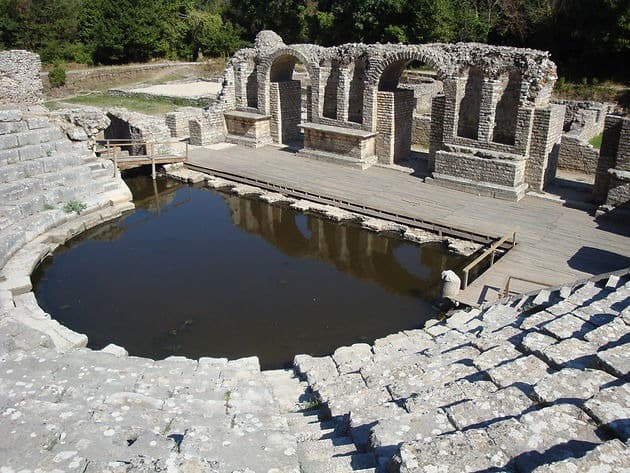
- The Roman theatre: built in the 2nd century BC, carved into the hillside, it is one of the best-preserved elements of the site and once accommodated several thousand spectators.
- The 6th-century basilica: large early Christian church of which the walls, baptistry and a remarkable mosaic floor remain, typically protected under a layer of sand for conservation.
- The medieval fortress: situated on high ground, it has been converted into a museum presenting objects from excavations, including the statue of the goddess of Butrint.
- The Venetian ramparts and towers: witnesses to the last major phase of occupation of the site.
Around the hill, the waters of Lake Butrint, connected to the Adriatic Sea by the Vivari Canal, complete the landscape. Along the canal's banks, mussel farms are visible from the site and are sold in restaurants throughout the region.
Practical information
The site is open year-round, with extended hours during peak season. Entry is charged and ranks among the higher fees for Albanian archaeological sites, but remains moderate by European standards; a combined ticket typically includes the fortress museum. As rates and hours change regularly, it is advisable to verify this information with the Saranda tourist office before your visit.
Allow two to three hours to tour the site leisurely. Good walking shoes are useful, as the terrain is uneven and sometimes wet. In summer, bring water, a hat and insect repellent, the area being marshy.
When to go
The best time to visit Butrint extends from spring to early autumn, with a preference for May-June and September-October: temperatures are pleasant, vegetation remains green and crowds are more measured than in peak summer. In July and August, heat can be heavy on the site, which offers little shade, and groups arrive from Saranda and Corfu; arriving early morning or late afternoon remains the best strategy.
The month of July hosts the Butrint International Theatre Festival, with performances held in the Roman theatre. It is one of the rare moments when the site resumes a function close to its ancient purpose.
How to get there
Butrint is located 24 km south of Saranda. The road, paved, hugs the coast then Lake Butrint and passes through the village of Ksamil; the journey takes about thirty minutes by car. Buses regularly connect Saranda to Butrint during the day; a round-trip by taxi remains a common option for travelers in transit. From Corfu, ferry crossings reach Saranda in less than an hour, which allows for a day excursion.
Nearby
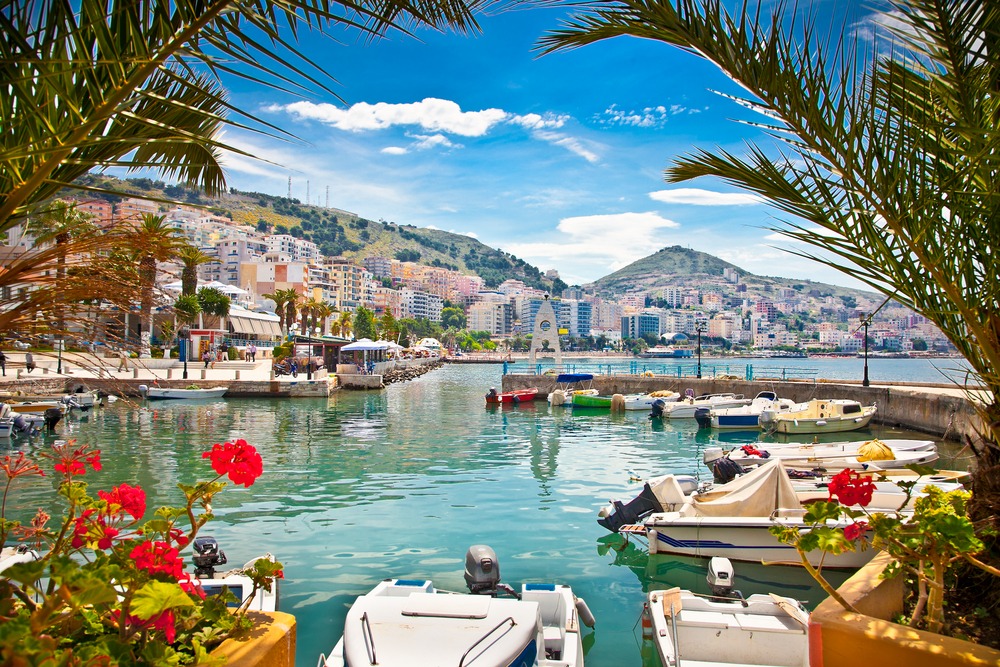
- Saranda: the main seaside resort on the Albanian Riviera, a logical base for visiting Butrint.
- Ali Pacha's Castle: a small coastal fortress located on the road between Saranda and Butrint.
- Berat Castle: another UNESCO-listed site, further north, to combine on a complete Albanian itinerary.
- Benja thermal springs: a nature stop in the hinterland of the south, accessible on the route to Tirana.
Frequently asked questions
Frequently asked questions
Plan your trip
Butrint fits naturally into an itinerary combining the Albanian Riviera, Gjirokastër and the country's centre. To build a bespoke trip including southern Albanie, consult our suggestions for travel in Albanie.
Interested in this visit?
We can include it in your personalised itinerary.