Gazimestan Memorial
Gazimestan Memorial
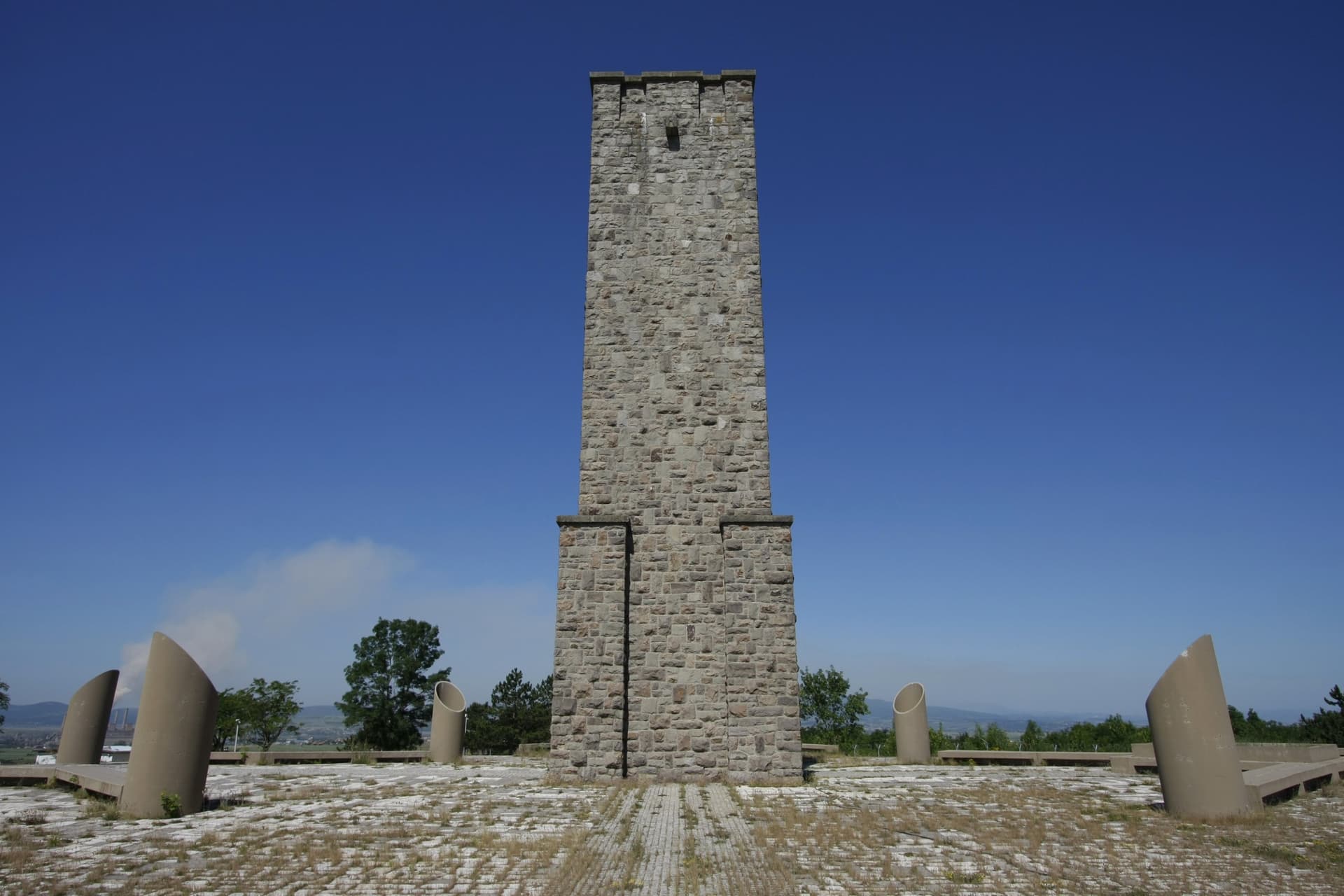
A 25-meter stone tower erected in 1953 on the Kosovo Polje plain, the Gazimestan Memorial commemorates the 1389 battle between Serbs and Ottomans.
The Gazimestan Memorial stands on the Kosovo Polje plain, a few kilometers northwest of Pristina. This 25-meter stone tower commemorates the Battle of Kosovo Polje of 28 June 1389, a founding event in Serbian national memory. The monument, designated a historic and cultural site of exceptional importance by Serbia, remains today a place laden with symbolism, situated in Kosovar territory but administered by Serbia.
Why visit the Gazimestan Memorial
The site appeals equally to medieval history enthusiasts and travelers interested in the contemporary political memory of the Balkans. The 1389 battle marked the beginning of prolonged Ottoman dominion over the region, and the monument inscribes this episode within a Serbian national narrative sustained over more than six centuries.
Access is free, the visit brief (allow 30 to 45 minutes), and the panorama from the summit overlooks the plain where armies clashed. The location lends itself to a stopover on the route between Pristina and Mitrovica.
History of the monument
The current memorial was built in 1953 by architect Aleksandar Deroko, when Kosovo was part of the Socialist Federal Republic of Yugoslavia. It succeeded two earlier vanished markers:
- A marble pillar erected in 1402 by despot Stefan Lazarevic, son of Prince Lazar, to commemorate the battle. This pillar disappeared under Ottoman rule.
- A small monument built in 1924, destroyed during World War II.
The site is also known for the Gazimestan speech delivered in 1989 by Slobodan Milošević before a crowd gathered for the 600th anniversary of the battle. This speech is retrospectively associated with the rising tensions that led to the Yugoslav Wars. Kosovo, then an autonomous province of Serbia, declared its independence in 2008, a status recognized by part of the international community.
The Battle of Kosovo Polje (1389)
The confrontation took place on 28 June 1389 between the Ottoman army and a Serbian coalition led by Prince Lazar. Estimates of troop strength vary considerably among historians: figures around 140,000 Ottomans against 70,000 Serbs are often cited, but these numbers should be treated with caution. The battle resulted in the deaths of Prince Lazar and Sultan Murad I. Its outcome is generally considered inconclusive, but it paved the way for the gradual Ottoman subjugation of Serbia. Serbian tradition, nourished by epic songs, has made it a founding event.
The etymology of the name
The toponym Gazimestan combines two words: gazi (Ottoman, meaning "hero" or "champion") and mesto (Serbian, meaning "place"). Literally, "the place of heroes."
What to see on site
The monument is organized around a 25-meter stone tower, sealed by six beveled concrete cylinders and designed in the silhouette of a medieval tower. Key features to observe:
- The reproduction of the marble column of despot Stefan Lazarevic, installed beside the monument.
- The Curse of Kosovo poem carved into the tower, attributed to Prince Lazar before the battle:
"Whoever is Serbian and of Serbian birth, / Of Serbian blood and heritage, / Fails to come to the Battle of Kosovo, / May he never have the children his heart desires! / Neither son nor daughter / May nothing grow from what his hand plants! / Neither young wine nor white wheat / And may he be cursed from century to century!" - The interior staircase leading to the summit with a view over the battlefield plain.
When to visit
The site is accessible year-round. The most significant date is 28 June, St. Vitus Day (Vidovdan), the Serbian national holiday commemorating the battle for over six centuries. Each year, pilgrims from Serbia and the region gather around the monument. The atmosphere is then distinctive, but the crowds and political charge of the day may deter some travelers; it is quieter to visit on other dates, ideally in spring or autumn for pleasant temperatures.
Practical information
- Access: free.
- Identification: a passport is required at the security checkpoint staffed by international forces (KFOR).
- Visit duration: 30 to 45 minutes.
- Security: the site is open and monitored; the visit poses no particular issues in normal circumstances, but the area remains sensitive and it is advisable to check the local situation before visiting.
How to get there
The memorial is located approximately 6 to 8 km northwest of Pristina, along the Pristina–Mitrovica highway, a few hundred meters east of the road. Access is primarily by car or taxi from the capital (allow 15 to 20 minutes travel time). There is no direct public transport; a private driver or taxi service remains the most straightforward option.
Nearby attractions
The memorial can be incorporated into a day of exploration around Pristina. Several sites complement the visit:
- The Pristina Bear Sanctuary, an animal refuge accessible near the capital.
- The historic center of Pristina, with its imperial mosque and Ottoman buildings.
- Further west, the Junik Mountains for a nature stopover.
Frequently asked questions
Frequently asked questions
The monument is located on the territory of the Republic of Kosovo, independent since 2008, but is designated a historic and cultural site of exceptional importance by Serbia, which ensures its symbolic administration. This dual belonging reflects the sensitivity of the site.
Yes. A security checkpoint operates at the entrance and a passport must be presented. An identity card is not sufficient.
No, access to the monument is free.
Yes, an interior staircase allows you to reach the top of the tower, from which there is a view over the Kosovo Polje plain.
28 June (Vidovdan) is the commemorative date; it attracts many Serbian pilgrims but crowds and political significance are pronounced. Outside this date, spring and autumn offer more peaceful visiting conditions.
Plan your trip
To incorporate the Gazimestan Memorial into a broader itinerary, consult our Kosovo journeys and their memorial, natural, and cultural stages.
Interested in this visit?
We can include it in your personalised itinerary.