Grand Bazaar of Istanbul
Grand Bazaar of Istanbul
At the heart of Beyazıt, the Grand Bazaar brings together over 4,000 shops beneath 15th-century Ottoman vaults. Carpets, jewellery, ceramics and spices: a living market to explore with purpose.
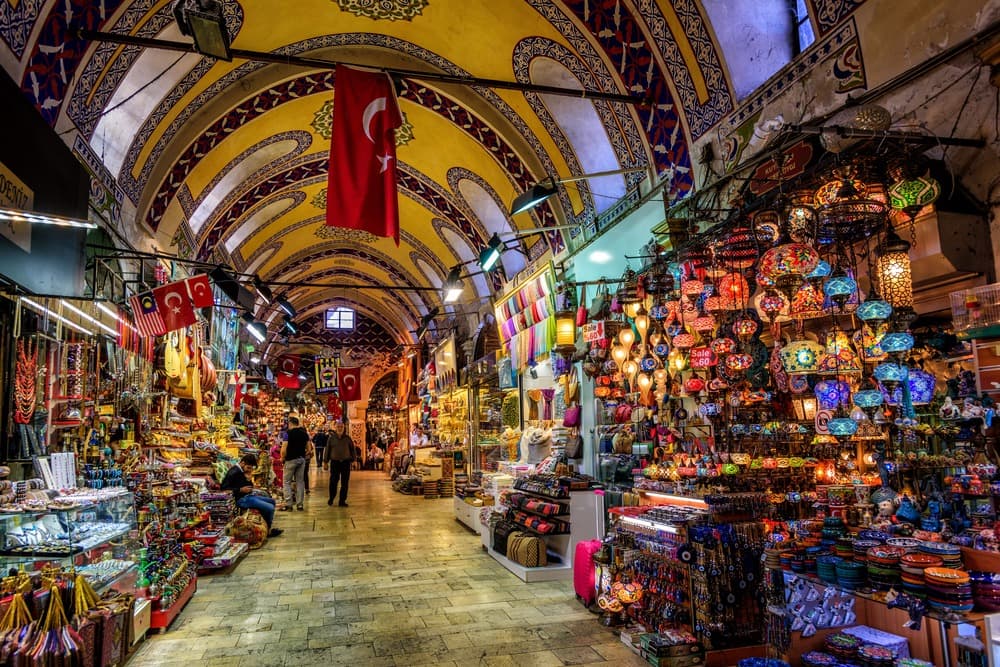
In the heart of the Beyazıt quarter, the Grand Bazaar is one of the world's largest covered markets. Built in the 15th century under Mehmed II, it now houses over 4,000 shops spread across about sixty interior streets. Carpets, gold jewellery, ceramics, spices, leather: each alley has its own specialty. It is a living place of commerce, not a museum — merchants haggle, carts circulate, the scent of tea lingers constantly.
Practical information at a glance
- Admission: free
- Closed: Sundays and religious holidays (notably Eid)
- Recommended duration: 1.5 to 3 hours depending on your pace
- Access: Tram T1, Beyazıt-Kapalıçarşı or Çemberlitaş stop
- Dress code: no clothing restrictions
- Accessibility: uneven paved floors, wheelchair navigation difficult
What to see
The bazaar is divided into distinct sectors. The inner Bedesten (İç Bedesten), the oldest section, concentrates antiques, vintage jewellery and collector's items. Around it, the alleys specialize: goldsmiths' street, carpet street, leather street. Shop facades are often adorned with Iznik tiles or calligraphy. Several Ottoman fountains and neighbourhood mosques punctuate the route.
History and context
Construction began around 1455, shortly after the Ottoman conquest of Constantinople. Mehmed II had two bedestens (covered halls) built to finance the upkeep of Hagia Sophia. The market gradually expanded, absorbing the surrounding streets. Fires and earthquakes damaged it several times; the current structure dates largely from 19th-century reconstructions. At its Ottoman peak, it included caravanserais, hammams and mosques integrated into the complex.
Highlights of the visit
The İç Bedesten
This is the historic core of the bazaar, identifiable by its four wrought-iron gates. You'll find Ottoman antiques, ancient coins, weapons and collector's jewellery. The atmosphere here is calmer than in the main commercial alleys.
Goldsmiths' Street (Kalpakçılar Caddesi)
The main artery of the bazaar, lined with hundreds of gold and silver display windows. This is where 14 and 18-carat gold jewellery is concentrated, sold by weight according to the day's rate. Haggling is customary.
Adjacent hans
Several historic caravanserais adjoin the bazaar: Zincirli Han, Büyük Valide Han. Less frequented by tourists, they house artisan workshops (weavers, carpet restorers) and offer a more authentic atmosphere.
Photography tips
Natural light enters through skylights in the vaults: mid-morning, the rays create interesting chiaroscuro effects in the alleys. Ceramic shops with colourful wares and carpet displays offer the most graphic compositions. Always ask merchants' permission before photographing them — most willingly oblige.
Location and access
The Grand Bazaar is located in the Beyazıt quarter, on the historic peninsula (European side). Tram T1 serves the site directly from Sultanahmet (Beyazıt-Kapalıçarşı stop, two stations away). On foot from Hagia Sophia, allow about 15 minutes crossing the Hippodrome and Beyazıt Square. The Spice Bazaar (Mısır Çarşısı) is accessible by tram or on foot along the Golden Horn.
Nearby
- Beyazıt Mosque — 16th-century imperial Ottoman mosque, just steps from the bazaar's main entrance.
- Hagia Sophia — former Byzantine basilica converted into a mosque, 15 minutes on foot.
- Blue Mosque — six-minaret mosque facing the Hippodrome, in the Sultanahmet quarter.
- Spice Bazaar — covered market specializing in spices, teas and Turkish delight, near Galata Bridge.
- Topkapı Palace — former residence of Ottoman sultans, on the Saray promontory.
Frequently asked questions
No. It closes on Sundays and major religious holidays such as Eid al-Fitr and Eid al-Adha. Outside these days, it operates on weekdays and Saturdays.
For carpets, jewellery and handcrafted items, haggling is common and expected. For fixed-price items (spices, standard ceramics), it's less systematic but still possible.
Yes. The two markets are connected by tram T1 or on foot along the Golden Horn (approximately 20-25 minutes' walk). Allow half a day for both.
In the morning, right after opening, the bazaar is noticeably less crowded. Mid-afternoon sees peak foot traffic, especially during high season (June-August).
As in any major tourist market, stay alert about advertised prices and compare before buying. Beware of overly pushy vendors inviting you to "just look" at their shop.
Photography is generally tolerated in the alleys. Ask merchants' permission before photographing them — it's a matter of courtesy and most will agree.
Photos
Interested in this visit?
We can include it in your personalised itinerary.