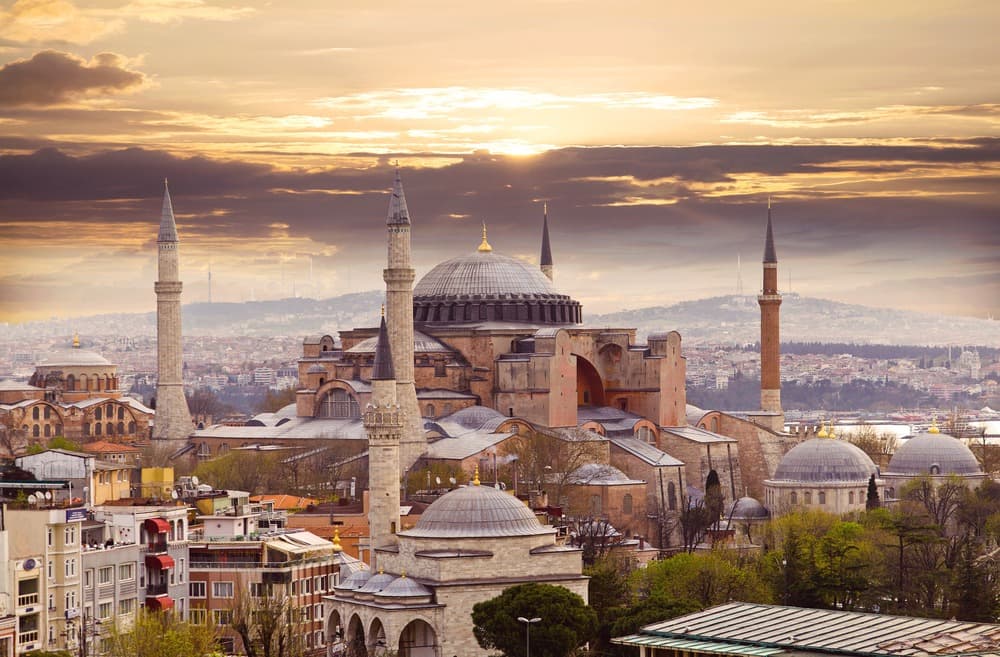
Hagia Sophia (Ayasofya)
Hagia Sophia (Ayasofya)
Fifteen centuries of history beneath a single dome: Hagia Sophia in Sultanahmet is both a masterpiece of Byzantine architecture and an active place of Muslim worship, to be visited with respect and curiosity.
Hagia Sophia has stood at the heart of Sultanahmet for nearly fifteen centuries. A Byzantine cathedral, then an Ottoman mosque, then a museum, then a mosque again since 2020: each layer of its history remains legible in the stone, mosaic, and marble. Few buildings in the world concentrate as many civilizational ruptures under a single dome.
Practical Information at a Glance
- Admission: free for worshippers during prayer times; paid tourist access outside prayers (official rates to be verified on the Turkish Presidency of Religious Affairs website).
- Required dress code: shoulders and knees covered, head covered for women; shoes to be removed at the entrance.
- Closure to tourists: during the five daily prayers (approximately 90 minutes each time).
- Recommended duration: 1.5 to 2 hours for a careful visit.
- Access: tram T1, Sultanahmet stop, two minutes on foot.
- Wheelchair accessibility: level entry possible, but the interior has uneven flooring.
What You'll See
The main dome reaches 55 meters and appears to float thanks to the forty windows surrounding it. The central nave is clad in polychrome marbles quarried from across the Mediterranean. The Byzantine mosaics — the Deesis, the Virgin and Child, imperial portraits — have been partially covered by Ottoman calligraphy, but remain visible in the upper galleries.
History and Context
Justinian I inaugurated the building in 537 AD; at that time, it was the largest church in the Christian world. In 1453, Mehmed II had Friday prayers celebrated there the day after the conquest of Constantinople. Minarets were added, mosaics gradually covered. Atatürk transformed it into a museum in 1934. In July 2020, a presidential decree reconverted it into an active mosque.
Highlights of Your Visit
The Dome and Its Pendentives
Look at the four triangular pendentives that ensure the transition from the square base to the circular dome: a structural feat copied throughout Ottoman architecture. The seraphim with outstretched wings, partially revealed, are of rare Byzantine craftsmanship.
The Deesis Mosaic
In the upper south gallery, this 13th-century panel depicts Christ between the Virgin and Saint John the Baptist. The rendering of the faces — modeling, gaze, expressiveness — announces the Italian Renaissance by two centuries.
The Imperial Galleries
Access is via a gentle stone ramp. Byzantine empresses attended services from these tribunes. You'll also find the "marble door" and several founder mosaics.
The Wishing Column
In the north narthex, a bronze column pierced with a hole: tradition holds that you insert your thumb and turn your hand one full rotation. The moisture felt is genuine — condensation in the hollow copper.
Etiquette and Rules of Visit
- Cover shoulders and knees before entering; wraps are sometimes available at the entrance, but it's best to bring your own.
- Remove your shoes and place them in the provided bag.
- Avoid crossing the prayer area if worshippers are praying.
- Speak softly throughout the building; phones on silent mode.
- Prayer areas reserved for Muslims are marked by barriers; do not cross them.
Photography Tips
Morning light enters through the west windows and illuminates the mosaics of the south gallery: arrive at opening time to avoid crowds and take advantage of this window. The dome photographs well from the center of the nave with a wide-angle lens. Photography is permitted without flash in tourist areas; avoid photographing worshippers in prayer.
Location and Access
Hagia Sophia is located in the Sultanahmet district, on the historical peninsula of Istanbul. Tram T1 (Sultanahmet stop) is the most direct option from Karaköy or Eminönü. The Blue Mosque is less than 200 meters to the southwest. The Topkapi Palace is a five-minute walk to the northeast.
In the Surroundings
- Blue Mosque (Sultan Ahmet Camii) — Six minarets and 20,000 blue Iznik tiles: the Ottoman response to Hagia Sophia, built right opposite.
- Topkapi Palace — Residence of Ottoman sultans for four centuries, with the imperial treasury and Islamic relics.
- Basilica Cistern (Yerebatan Sarnıcı) — 6th-century Byzantine underground reservoir, two minutes on foot, with its columns in the water.
- Istanbul Archaeological Museum — Greek, Roman, and Anatolian collections among the richest in the Near East.
- Hippodrome (Sultanahmet Meydanı) — Ancient Byzantine racing track, now a public square with the Obelisk of Theodosius and the Serpent Column.
Frequently asked questions
Yes, but tourist access is suspended during the five daily prayers (approximately 90 minutes each time). Outside these slots, non-Muslim visitors are admitted for an entrance fee.
Shoulders and knees covered for everyone. Women must also cover their head. Shoes are removed at the entrance and placed in a bag provided on-site.
Easily: the two buildings are less than 200 meters apart. Add the Basilica Cistern and the Hippodrome for a full day in Sultanahmet without having to use transportation.
Spring (April-May) and autumn (September-October) offer pleasant temperatures and shorter queues than July-August. Arriving at opening time remains the best way to avoid crowds regardless of season.
Photography without flash is permitted in tourist areas. It is forbidden to photograph worshippers during prayer. The upper galleries, where the Byzantine mosaics are found, are also accessible to cameras.
Allow 1.5 to 2 hours to see the main nave, upper galleries, and mosaics without rushing. A comprehensive guided tour can last up to 3 hours.
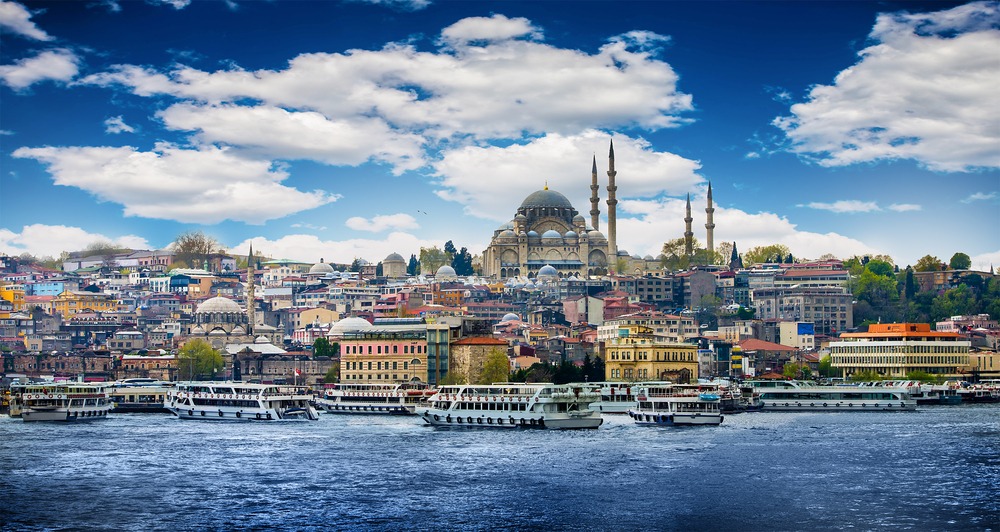
Photos
Interested in this visit?
We can include it in your personalised itinerary.